How to Fix a Damaged Lawn Patch from Dog Urine
Dog urine can leave yellow, straw-coloured circles in otherwise healthy grass. The concentrated nitrogen and salts in urine may burn leaf blades while encouraging a darker green ring around the damaged centre. The problem is especially noticeable during hot, dry weather when turf is already under stress.
A urine-damaged lawn patch is usually repairable, provided the affected soil is not compacted, contaminated by another substance, or repeatedly exposed before new grass has time to establish. The right approach depends on the grass variety, the season, drainage and how often the dog uses that part of the yard.
Australian conditions make timing important. A lawn in Brisbane may recover quickly during warm, humid weather, while turf in Melbourne can remain slow-growing through winter. In Perth, sandy soil may drain rapidly but still lose moisture quickly, and lawns in Sydney may need to cope with both summer heat and periods of heavy rain.
Before digging, check the whole area for other causes of bare grass. Lawn beetle larvae, fungal disease, leaking irrigation, herbicide drift and compacted soil can produce similar symptoms. A few simple observations will help confirm that dog urine is the likely source.
Identify the damage before treating it
A typical urine burn starts as a pale yellow or brown patch with a green, fast-growing margin. The outer ring appears because a smaller amount of nitrogen reaches that surrounding grass, acting like a fertiliser. Freshly affected turf may still have living roots, so it can recover without being removed.
Run your fingers through the grass and gently lift a few blades. If the crowns at soil level are firm and green, water the area thoroughly and wait several days. If the grass pulls away easily, the soil smells sour, or the patch is completely bare, renovation will be more reliable than simple watering.
Look for a repeating pattern. Several similarly sized circles along a fence, path or favourite toilet spot strongly suggest pet urine. A single irregular area may instead point to an irrigation fault, foot traffic or a chemical spill. Photographing the patch can help you monitor whether it is expanding or beginning to recover.
Flush salts from the root zone
The first treatment is deep watering. Slowly apply clean water to the damaged area so it moves below the root zone, carrying away concentrated salts and excess nitrogen. A brief sprinkle may wet the surface without correcting the underlying problem, particularly in clay soil or compacted ground.
Use a hose with a gentle shower setting and avoid washing soil away. In Australian suburbs affected by council water restrictions, follow the current rules for watering days, times and permitted equipment. Early morning is generally a practical time because evaporation is lower, although local regulations should take priority.
If the soil is hard, use a garden fork to make shallow holes around the patch before watering. This allows moisture to penetrate instead of running across the surface. Guidance on improving garden soil is useful when poor drainage or foot traffic is preventing water from reaching the roots.
Avoid adding large amounts of fertiliser, lime or gypsum without identifying a soil problem. Extra nitrogen can intensify the burn, while unnecessary amendments may alter soil chemistry without helping the grass. A soil test from a garden centre or laboratory is a better basis for any corrective treatment.
Remove and replace dead turf
Wait about a week after flushing the patch. If new green growth appears, continue light care and allow the existing lawn to fill in. When the centre remains brown and brittle, cut out the dead turf with a sharp spade. Remove a shallow layer that includes the damaged roots, but do not excavate more soil than necessary.
Loosen the exposed ground to a depth of roughly 50 to 75 millimetres. Pick out dead roots and stones, then mix in a small amount of screened topsoil or a turf underlay suited to the existing ground. In sandy Perth soils, a quality organic soil conditioner can improve moisture retention; in heavy clay, excessive organic material can create drainage problems if it is added as a thick layer.
Choose replacement turf that matches the lawn around it. Buffalo is common in many Australian yards and handles some shade, while couch and kikuyu prefer stronger sunlight and warm growing conditions. Buying a small roll or turf slab from a local landscape supplier or hardware retailer is often easier than trying to establish seed in a tiny patch.
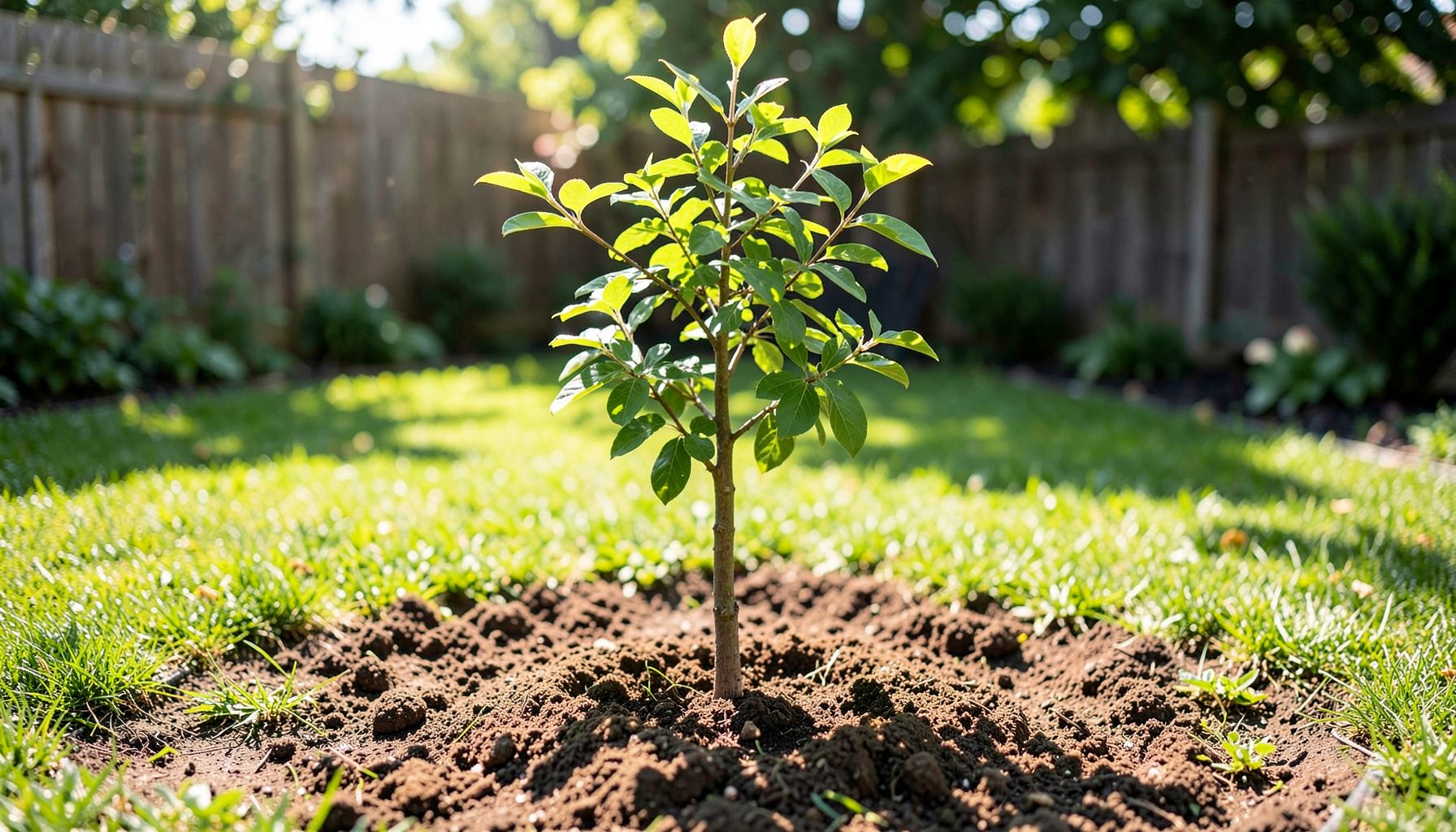
Cut the replacement piece slightly larger than the opening and press it firmly into place. The edges should sit level with the surrounding lawn so they are not scalped by the mower or damaged by foot traffic. Water it well immediately, then keep the root zone consistently damp until the turf resists a gentle lift.
Reseed small patches carefully
Seed is suitable when the damaged area is broad, irregular or difficult to match with available turf. Select a seed blend designed for the local climate and the existing lawn. Warm-season varieties such as couch and kikuyu need suitable soil warmth, whereas cool-season grasses have different establishment periods and maintenance needs.
Rake the surface lightly, scatter seed at the packet rate and cover it with a very thin layer of soil or lawn top-dressing. Too much cover can prevent germination. Keep the surface moist with frequent, light watering until seedlings appear, then gradually water more deeply and less often as roots develop.
Protect the repair from the dog with temporary garden mesh, a low barrier or supervised access. Even friendly investigation can loosen seed and freshly laid turf. In homes where the dog regularly uses the same route, a small gravel strip, mulch area or designated toilet zone may be easier to maintain than repeatedly repairing grass.
Do not apply weed killer or general lawn products until the new growth is established and the label permits use on young turf. In Australia, lawn pesticides and herbicides should be registered for their intended use under the national agricultural chemical framework, and the product label controls application directions, protective equipment and disposal requirements.
Prevent recurring urine burns
The most dependable prevention is dilution soon after the dog urinates. If practical, rinse the spot with a small amount of water. This is especially helpful during heatwaves or when the dog has been drinking less than usual. Fresh drinking water, shade and regular opportunities to toilet away from the main lawn also reduce concentrated deposits.
Train the dog to use a designated section planted with hardy grass or covered with mulch, decomposed granite or washed gravel. Keep the surface clean and check that it drains well. Artificial turf can be another option, but it still requires regular rinsing and odour control; otherwise urine can collect underneath and create a different maintenance problem.
Keep mowing blades sharp and avoid removing more than one-third of the grass height at a time. A slightly longer lawn develops deeper roots and usually handles heat better. Adjust watering to the season rather than following a fixed daily routine, and inspect irrigation heads for blocked nozzles or uneven coverage.
For broader home-care guidance, the site’s home maintenance library includes related upkeep topics that can help identify problems before they spread. If patches continue despite prevention, investigate soil drainage, pests or disease rather than repeatedly applying lawn products.
A dog urine patch usually needs three things: salts flushed from the soil, dead turf replaced where necessary, and a plan to reduce repeated exposure. Match the repair to the grass variety, observe local watering restrictions, protect new growth and rinse frequently during dry weather. The practical routine is simple: water the spot deeply, repair only what fails to recover, and guide future toilet breaks to a durable area.