
When to Plant a Sapling and How to Water It Properly
Planting a sapling is a long-term investment in shade, wildlife habitat, curb appeal, and soil stability. The young tree’s first year is especially important because its root system is still small and easily stressed by heat, drought, compacted soil, and competition from grass.
Timing and watering work together. Choosing a suitable planting window gives roots time to establish, while a consistent moisture routine helps the tree adapt without creating waterlogged soil. Good preparation also reduces the risk of transplant shock and early decline.
The best approach depends on your region, soil type, rainfall, and the tree species. A deciduous tree may follow a different schedule from an evergreen, but the core principles remain the same: plant during mild weather, protect the root ball, and water deeply rather than briefly soaking the surface.
Choose The Right Planting Season
In most areas, the best time to plant a sapling is during early spring or fall. Cool air temperatures reduce stress on the foliage, while moderately warm soil encourages root growth. Fall planting is often especially effective because roots can develop before the following summer, provided the ground is not frozen.
Spring planting works well when the soil is workable and the tree has not yet produced heavy new growth. It gives the sapling a full growing season to establish, but it also requires closer attention to watering as temperatures rise. Avoid planting during periods of extreme heat, drought, or saturated soil.
Local climate matters. In warm southern regions, late fall through early winter may provide excellent conditions. In colder climates, plant several weeks before the ground typically freezes. Check the expected weather rather than relying on a fixed calendar date.
Prepare The Site Before Digging
Select a location with enough sunlight, drainage, and room for the mature canopy and root system. Keep the trunk away from utility lines, structures, septic areas, and paved surfaces that could be lifted by expanding roots. Consider how shade will change around the home as the tree grows.
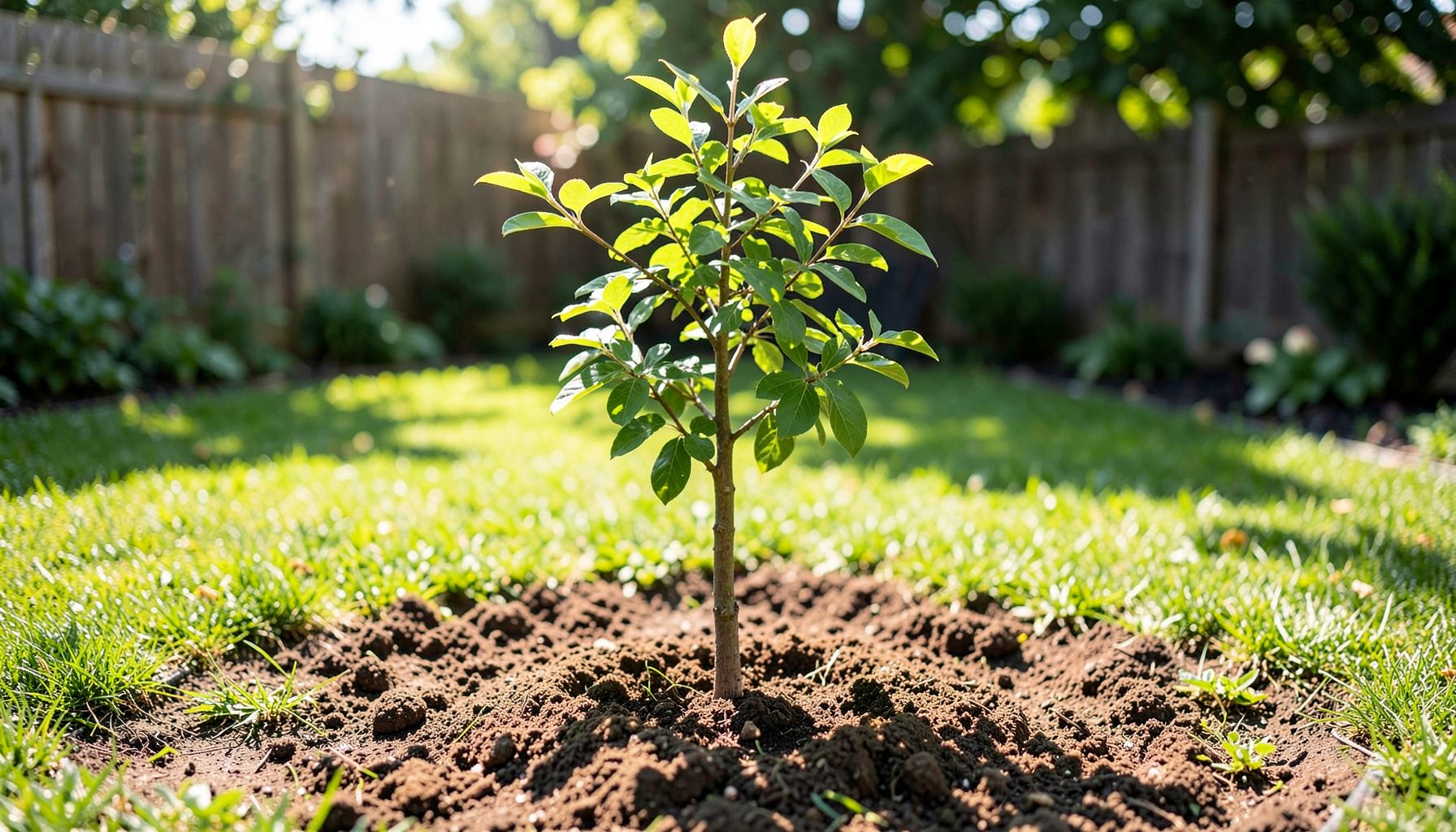
Dig a hole two to three times wider than the root ball, but no deeper than its height. The trunk flare—the point where the trunk broadens into major roots—should sit at or slightly above the surrounding soil. Planting too deeply can restrict oxygen, encourage decay, and cause long-term instability.
Remove containers, synthetic wrapping, tags, and wires before setting the sapling in place. Loosen circling roots gently, then backfill with the soil removed from the hole. Avoid filling the hole with rich amendments alone, since roots need to grow into the surrounding native soil rather than remain confined to a soft pocket.
Water Deeply After Planting
Water the sapling immediately after planting to settle the soil around the roots and eliminate large air pockets. Apply water slowly over the root zone, allowing it to soak in instead of running across the surface. A gentle hose stream, soaker hose, or bucket works better than a high-pressure spray.
For the first several weeks, check the soil two to four inches below the surface. If it feels dry, water thoroughly. If it is cool and moist, wait. The goal is consistent moisture, not continuously wet soil. Excess water can suffocate roots and promote fungal problems, especially in heavy clay.
A newly planted tree commonly needs deep watering two or three times per week during dry weather, though rainfall and soil drainage may change that schedule. After the first month, gradually extend the time between watering sessions while increasing the depth of each application. This encourages roots to grow outward and downward.
| Planting period | Typical watering approach | Main concern |
|---|---|---|
| Early spring | Water when the upper soil begins to dry; monitor as temperatures rise | Sudden heat and new leaf growth |
| Late spring or summer | Water deeply several times weekly during dry spells | Transplant shock and rapid moisture loss |
| Fall | Water regularly until seasonal rain is dependable or the ground begins to freeze | Dry winter soil before dormancy |
| Winter in mild climates | Water during extended dry periods when the soil is workable | Root desiccation during cold, dry weather |
Protect Roots With Mulch
Apply a two- to four-inch layer of organic mulch, such as shredded bark, wood chips, or pine straw, over the root zone. Mulch helps conserve water, moderate soil temperature, and reduce competition from grass and weeds. Keep it several inches away from the trunk.
A mulch volcano piled against the bark creates a damp, sheltered environment where insects and disease can cause damage. It may also encourage roots to grow into the mulch instead of the soil. Spread mulch broadly and evenly, extending toward the edge of the planting hole or beyond the developing root zone.
Inspect the mulch after heavy rain and wind. Replace thin areas, but do not continually build up layers without removing compacted or decomposing material. Maintaining the correct depth is more useful than adding fresh mulch every season.
Recognize Signs Of Water Stress
Wilting leaves are an obvious warning, but they are not the only sign of trouble. Dry, curling, yellowing, or prematurely falling leaves may indicate insufficient moisture, root injury, heat stress, or disease. Check the soil before watering because symptoms can look similar when roots are sitting in excess water.
Slow growth, cracked soil, and a shrinking gap between the root ball and surrounding ground also suggest drought stress. Conversely, persistently soggy soil, foul odors, leaf yellowing, and soft or dark roots may indicate overwatering or poor drainage. Do not compensate for a drainage problem by watering more often.
Weather around the home can affect the sapling’s needs. Roof runoff, downspouts, and compacted paths may send too much water toward one side of the root zone. During winter, understanding how to prevent ice dams can also help protect nearby soil and foundations from concentrated meltwater.
Adjust Care Through The First Year
During the first year, inspect the sapling weekly during dry or unusually hot weather. Push a finger or a soil probe into the root zone rather than judging moisture by the surface alone. Newly planted trees often need supplemental water even when the lawn appears green.
Reduce watering frequency after the tree produces healthy new growth and remains stable through ordinary weather. That does not mean abandoning the routine during drought. Mature-looking foliage can still conceal a developing root system that needs deep moisture.
Staking is usually unnecessary unless the site is windy or the trunk cannot remain upright. If stakes are needed, use flexible ties and remove them after one growing season. Inspect the trunk for rubbing and keep lawn equipment away from the base. As part of broader home upkeep, homeowners can find additional practical maintenance guidance through the home care resources.
A Simple Sapling Care Checklist
- Confirm the trunk flare is visible at soil level.
- Check soil moisture several inches below the surface before watering.
- Apply water slowly across the entire root ball and nearby soil.
- Maintain a two- to four-inch mulch layer without touching the trunk.
- Inspect leaves, bark, ties, and drainage once each week.
Prevent Problems Before They Spread
A young tree benefits from early observation. Look for bark wounds, loose ties, leaning, fungal growth, insect activity, and damage from string trimmers or mowers. Small issues are easier to correct before they compromise the trunk or root system.
Avoid fertilizing immediately unless a soil test or qualified local guidance indicates a deficiency. Strong fertilizer can burn tender roots and stimulate foliage before the root system is ready to support it. Healthy soil moisture, correct planting depth, and mulch usually matter more during establishment.
Watering should also be coordinated with other property checks. If a downspout discharges beside the sapling, redirect it safely rather than allowing repeated erosion or flooding. When inspecting nearby parts of the house, homeowners can learn how to check attic leaks, since unnoticed roof drainage problems may affect the planting area below.
Build A Reliable Tree Care Routine
The most successful sapling care is simple and consistent. Plant during a mild season, set the tree at the correct depth, water deeply when the root zone dries, and protect the soil with properly placed mulch. Adjust the schedule as rainfall, temperature, and growth change.
Record the planting date, species, watering sessions, and notable weather during the first year. This makes it easier to identify patterns and refine care without overwatering. Put these steps into practice at the next suitable planting window, and give the sapling regular attention until its roots are firmly established.