
The Best Time of Year to Plant a Shade Tree in Your Yard
A shade tree can make a yard cooler, more comfortable, and more attractive while providing habitat for birds and other wildlife. It can also protect siding, windows, patios, and outdoor living areas from intense sunlight. Choosing the right planting season gives a young tree the best chance to establish strong roots before facing heat, drought, or winter cold.
The ideal timing depends on local climate, tree species, soil moisture, and whether the tree is sold in a container, with a wrapped root ball, or as a bare-root sapling. In warm regions such as southwest Georgia, planting is often successful during the cooler parts of the year, when the ground is workable and the tree is not under heat stress.
Good timing is only one part of successful tree planting. Proper placement, careful watering, adequate space for mature branches, and protection from lawn equipment all affect long-term growth. A few decisions made before digging can prevent years of avoidable maintenance.
Why seasonal timing matters
Trees establish themselves through their roots before they produce vigorous top growth. When planted during mild weather, a young tree can direct energy toward root development rather than trying to support leaves during extreme heat. A well-established root system helps the tree handle dry periods later.
Fall is often an excellent planting season in areas with mild winters. Soil may remain warm enough for root growth after air temperatures cool, while evaporation slows and rainfall is more dependable. Planting several weeks before the ground typically becomes cold gives roots time to settle without forcing new leafy growth.
Early spring is another reliable window, especially for trees that are sensitive to freezing temperatures. Planting before intense summer heat arrives allows roots to expand during the growing season. Avoid planting when the soil is muddy, frozen, or so dry that digging damages the root zone.
Choosing between fall and spring
Fall planting generally works well for hardy deciduous shade trees, including many oaks, maples, elms, and river birches suited to local conditions. The tree may lose its leaves soon after planting, but that is normal. Dormancy reduces water loss while the roots continue developing whenever soil temperatures remain favorable.
Spring can be preferable for tropical or frost-sensitive species and for trees that may suffer from a sudden cold snap. It is also a practical choice when a suitable tree becomes available at a local nursery during the spring sales season. Plant early enough to give the root system time to grow before hot weather and irrigation demands increase.
Container-grown trees offer the most flexibility because their roots remain in a defined soil mass. Even so, summer planting requires closer attention to watering. Bare-root trees have a shorter planting window and should be planted while dormant, with their roots kept moist and protected from sun and wind.
Reading your yard before planting
Select a location based on the tree’s mature height, crown width, and root characteristics rather than its current nursery size. Keep large trees away from power lines, roof edges, septic systems, driveways, and foundations. Check overhead and underground utilities before digging; local county offices may help direct homeowners to relevant public resources.
Observe the yard at different times of day. A spot that seems sunny in the morning may be shaded in the afternoon, while reflected heat from pavement can stress a young tree. Consider drainage as well. Most shade trees need consistent moisture but perform poorly where water stands around their roots for long periods.
Test the soil if the tree has particular pH or fertility requirements. Do not automatically fill the planting hole with rich compost or fertilizer. A tree generally establishes more effectively when its roots grow outward into the existing soil rather than remaining confined to a pocket of heavily amended material.
Preparing the planting hole
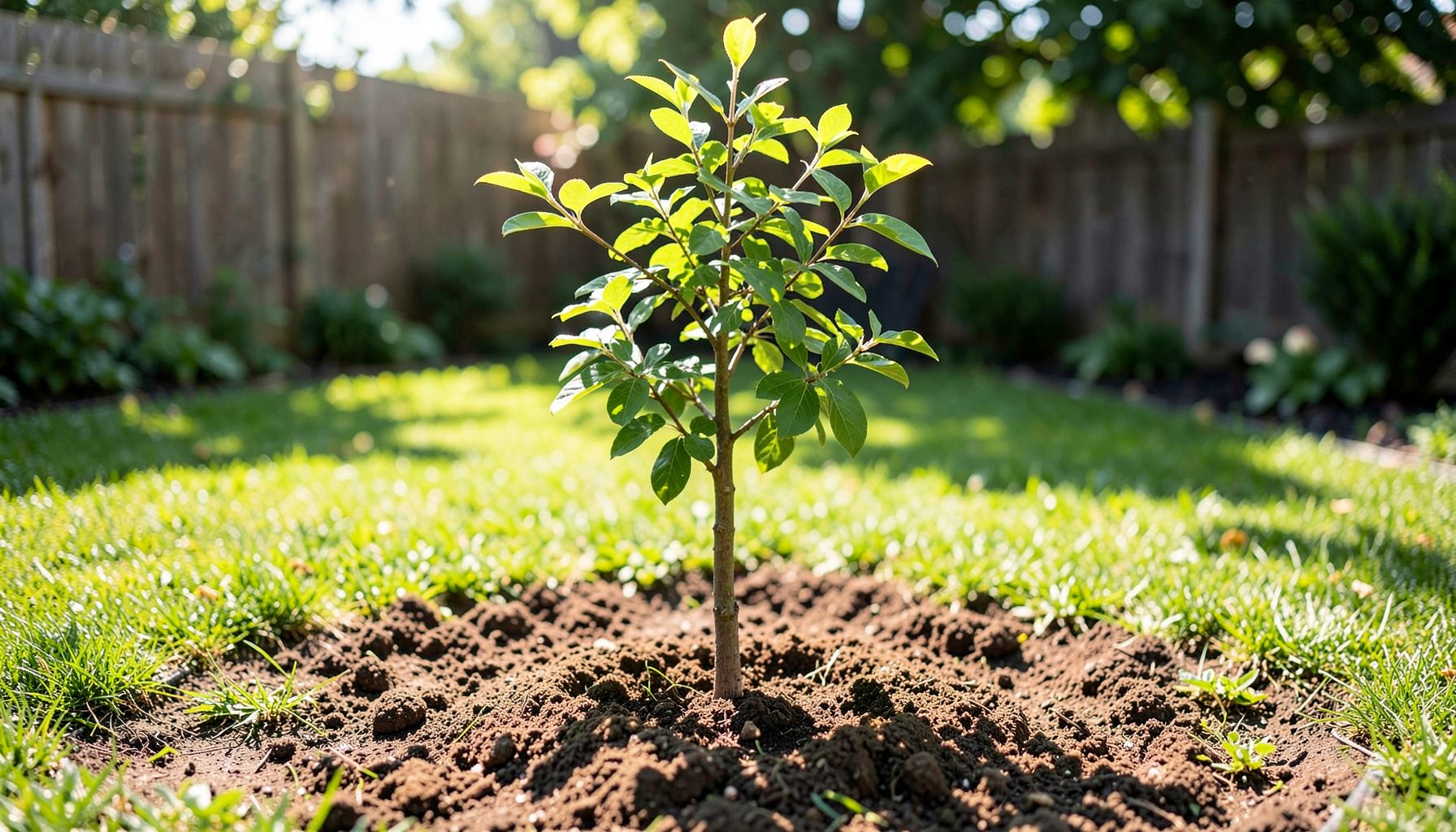
The planting hole should usually be two to three times wider than the root ball and no deeper than its height. The topmost major root, known as the root flare, should sit at or slightly above the surrounding soil level. Planting too deeply can restrict oxygen, encourage rot, and cause long-term trunk problems.
Remove containers, plastic, wire, and synthetic wrapping before placing the tree. If roots circle tightly around the root ball, loosen or cut a few carefully so they can grow outward. Handle the tree by its root ball rather than lifting it by the trunk, which can damage delicate roots.
Backfill with the soil removed from the hole unless a soil test or professional recommendation indicates otherwise. Water slowly as you backfill to eliminate large air pockets. Avoid creating a raised mound around the trunk; instead, apply mulch across the root zone while keeping it several inches away from the bark.
Comparing planting windows
| Planting period | Main advantages | Main concerns | Follow-up care |
|---|---|---|---|
| Late fall | Cooler air, lower evaporation, time for root growth | Early freezes or saturated soil | Check moisture during dry spells |
| Winter dormancy | Minimal top growth and reduced water loss | Poor choice for frozen or waterlogged ground | Protect roots from severe cold |
| Early spring | Roots can establish before summer heat | Narrow window before rapid leaf growth | Water consistently as temperatures rise |
| Summer | Nurseries may offer many container trees | Heat, drought, and transplant shock | Provide frequent deep watering and shade protection |
| Early fall | Warm soil and improving rainfall | Tree may face a dry autumn | Mulch and monitor moisture until dormancy |
For many Georgia yards, early fall through early spring provides the most forgiving conditions. Exact dates vary with weather and species, so use the tree’s hardiness, nursery guidance, and recent local conditions as additional factors. A late-season planting during an unusually hot or dry period may need to wait.
Watering and protecting a new tree
Water immediately after planting, then apply water slowly and deeply so moisture reaches the full root ball and surrounding soil. During the first growing season, inspect the soil several inches below the surface instead of relying only on appearance. Water when the soil begins to dry, adjusting for rainfall, temperature, and drainage.
Frequent shallow watering can produce weak surface roots. Deep, less frequent watering encourages roots to explore the surrounding soil, but the ground should not remain saturated. A soaker hose or slow-drip method can distribute water more evenly than a strong spray at the trunk.
Apply a two- to four-inch layer of organic mulch over the planting area, leaving a clear ring around the trunk. Mulch helps moderate soil temperature, reduce evaporation, and limit competition from grass. Inspect it regularly so it does not touch the bark or form a dense, wet mound.
Stakes are usually unnecessary if the tree can stand upright without movement at the root ball. If wind protection is needed, use flexible ties and remove them after the first growing season. Protect the trunk from string trimmers, mowers, animals, and sunscald, since bark injuries can become entry points for pests and decay. Routine home care guidance, including related yard and exterior maintenance topics, is available in the site’s house care resources.
Recommendations for a healthier shade tree
- Choose a species adapted to your local climate, soil, sunlight, and available space.
- Plant in fall or early spring whenever the ground is workable and severe weather is unlikely.
- Keep the root flare visible and place the tree no deeper than it grew in its nursery container.
- Water deeply and monitor soil moisture throughout the first year, especially during hot weather.
- Mulch broadly but keep mulch away from direct contact with the trunk.
- Inspect the tree regularly for damaged bark, leaning, pests, and signs of drought stress.
A shade tree is a long-term investment in the comfort and condition of your property. Mark the best planting window on your seasonal maintenance calendar, prepare the site before bringing the tree home, and give the new roots steady care through their first year. With the right species and thoughtful placement, a small sapling can eventually become one of the most valuable features in the yard.