Should you plant a tree near your septic system?
A tree can improve shade, privacy, wildlife habitat, and curb appeal, but planting in the wrong place may create expensive septic problems. The underground drainfield, septic tank, distribution lines, and soil around them all need room to function properly.
Tree roots naturally seek moisture and oxygen. Septic pipes and drainfield trenches often provide both, especially when a small leak, a damaged connection, or consistently damp soil is present. Roots can enter joints, wrap around pipes, or interfere with wastewater absorption.
The safest approach is to locate every part of the septic system before digging. A septic tank map, installation record, property survey, or inspection by a qualified septic professional can help you identify a suitable planting zone.
Why septic areas are sensitive
A septic system depends on a carefully designed relationship between the tank, pipes, soil, and drainfield. Wastewater leaves the tank through an outlet pipe and is distributed through the drainfield, where soil filters and absorbs it. Deep digging, heavy roots, and added soil can disturb this process.
The tank and drainfield are also vulnerable to physical pressure. Large tree roots may lift or crack pipes, while a mature tree’s weight can compact soil above buried components. Even shallow-rooted species can become a problem if they are planted directly over a line or too close to an access cover.
Tree roots do not usually break into a healthy, solid pipe without an opening. However, small cracks, loose joints, and older clay or concrete pipes can attract roots. Once inside, the roots may grow rapidly and restrict wastewater flow.
How much space should a tree have?
There is no universal setback that works for every property. The necessary distance depends on the tree’s mature height, canopy width, root pattern, soil conditions, septic layout, and local regulations. A small ornamental tree may need considerably less space than an oak, willow, poplar, or other vigorous, moisture-seeking species.
As a cautious planning rule, keep large trees at least 30 feet from septic tanks and drainfields, and consider 50 feet or more for species known for aggressive or spreading roots. Smaller trees are often placed at least 10 to 20 feet away, while shrubs and herbaceous plants can usually be located closer if their roots remain shallow.
Measure from the entire septic component, not merely from the tank lid. The drainfield may extend well beyond the visible inspection ports, and replacement areas may also be reserved nearby. When in doubt, choose a different planting location rather than relying on an approximate measurement.
Choosing safer species for the landscape
A tree’s mature size matters more than the size of the sapling at the garden center. Look for species with modest root systems, moderate growth, and a mature canopy that will not shade or overload the drainfield. Local extension offices, certified arborists, and reputable nurseries can help match a species to your soil and climate.
Avoid planting moisture-loving trees with vigorous roots near buried wastewater components. Willows, cottonwoods, poplars, silver maples, and some bamboo varieties are frequent concerns. Their roots can travel far in search of water, making them poor choices for a septic protection zone.
Small ornamental trees, flowering trees, and carefully selected native species may work better at a safe distance. Young trees still need structural pruning and monitoring as they develop; guidance on pruning a young tree can help prevent weak branches and future clearance problems.
| Planting choice | Typical root concern | Better placement guidance |
|---|---|---|
| Large shade tree | Extensive roots and heavy mature canopy | Keep well away from the tank, drainfield, and reserve area |
| Willow, poplar, or cottonwood | Fast, moisture-seeking roots | Avoid near all septic components |
| Small ornamental tree | Usually more manageable, but still needs room | Place outside the recommended setback for its mature size |
| Shrubs and perennial plants | Mostly shallow roots | Use only when they will not block access or require deep digging |
| Turf grass and ground cover | Low root disturbance | Often suitable over a drainfield if mowing and soil conditions allow |
Planting without disturbing the system
Before digging, mark the tank, distribution box, drain lines, drainfield edges, and any reserve area. Call the appropriate utility-locating service for other buried infrastructure, since water, electrical, gas, and communication lines may cross the same yard. Septic records alone will not identify every underground hazard.
Keep excavation shallow and avoid adding raised beds, retaining walls, thick mulch, or heavy decorative features above the drainfield. These changes can alter drainage, compact soil, or reduce the oxygen available for wastewater treatment. Never drive vehicles or park heavy equipment over the tank or drainfield.
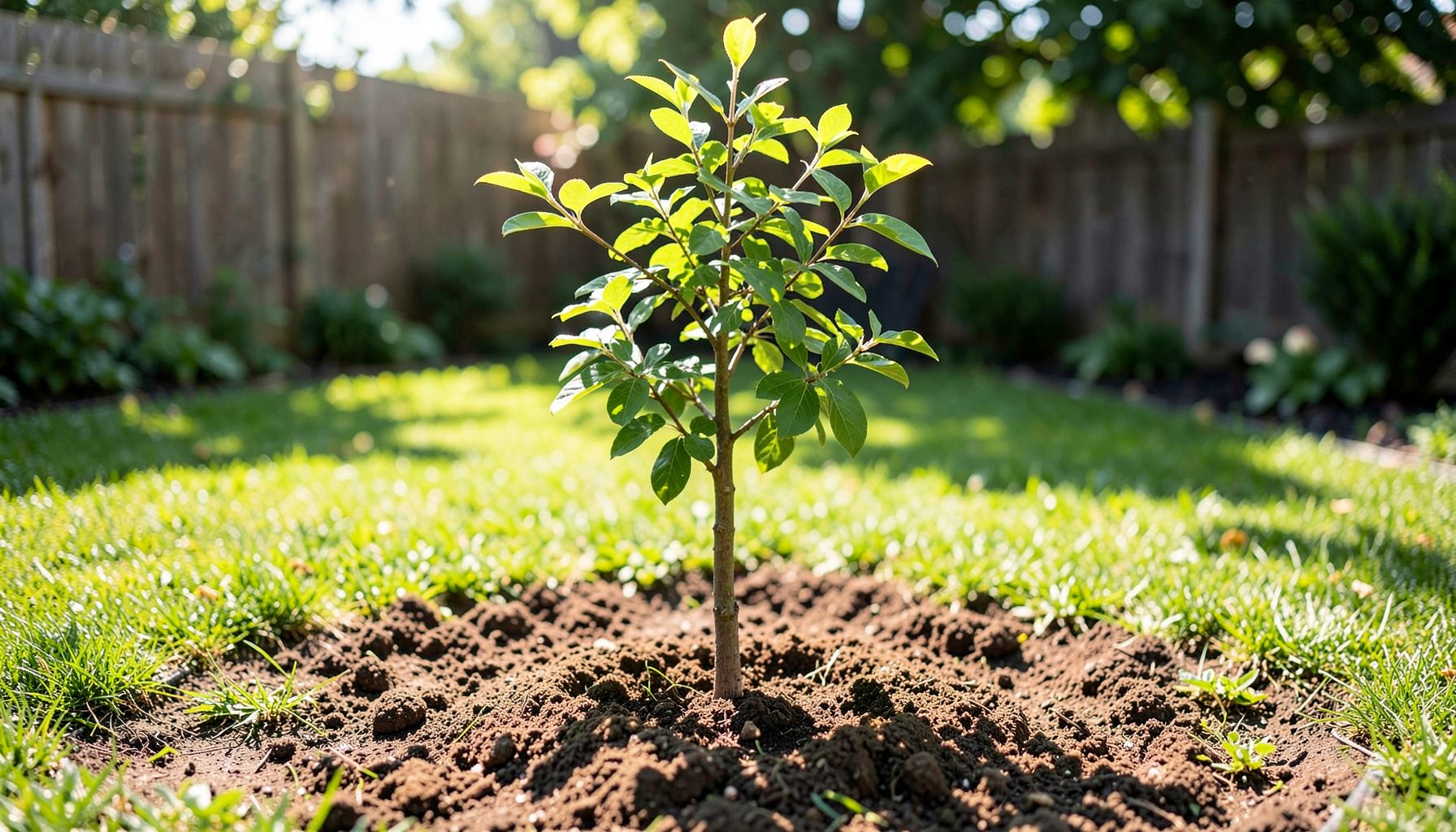
When a tree is planted near, rather than over, a septic area, water it carefully during establishment. Frequent shallow watering can encourage surface roots, while excessive irrigation may saturate soil around the drainfield. Follow local planting recommendations and keep the root flare at ground level instead of burying the trunk base.
Warning signs that need attention
Slow drains, sewage odors, unusually green grass, wet patches, or standing water near the drainfield can indicate a septic problem. A sudden lush strip of vegetation along a pipe route may mean wastewater or nutrient-rich moisture is reaching the soil. These signs do not prove that tree roots are responsible, but they warrant prompt evaluation.
If a tree begins leaning, develops a large root flare over a buried line, or shows roots entering a cleanout, avoid cutting the roots yourself. Root pruning can destabilize a tree and may damage the pipe further. A septic professional can inspect the line, while an arborist can evaluate the tree’s stability and recommend safe work.
Regular exterior inspections also help reveal related drainage concerns. Check grading, downspouts, surface water, and soil erosion around the house and septic area. Homeowners who are already reviewing painted siding and trim may find this exterior paint inspection guide useful because it encourages looking for moisture clues before damage spreads.
Maintenance that protects roots and pipes
Keep septic access covers visible and easy to reach. Do not conceal them beneath a tree, deck, shed, dense hedge, or permanent landscaping. Pumping schedules vary according to tank size, household occupancy, and wastewater use, so follow the schedule recommended for your system rather than waiting for a backup.
Use water efficiently and keep grease, harsh chemicals, medications, and nonflushable products out of household drains. Good wastewater habits reduce stress on the drainfield and make it less likely that a developing blockage will be mistaken for a landscaping issue.
A simple property sketch can prevent future mistakes. Mark the tank, lines, drainfield, reserve area, mature tree locations, and planned planting beds. Update the sketch after septic work, landscaping changes, or tree removal.
A practical planting checklist
- Obtain septic records and locate the tank, drainfield, pipes, and replacement area before purchasing a tree.
- Choose a species based on its mature root spread and canopy, not its current container size.
- Keep large or aggressive-rooted trees far from all septic components, using local guidance for exact setbacks.
- Protect the drainfield from vehicles, deep digging, added soil, excessive irrigation, and permanent structures.
- Arrange professional inspections when you notice sewage odors, wet ground, slow drains, or roots near pipes.
When a tree and septic system must share a small yard, prioritize access and long-term maintenance over immediate landscaping appeal. Plant outside the mapped protection zone, label the location for future homeowners, and monitor both the tree and the soil as they mature. Before beginning any excavation, consult local septic regulations and qualified professionals; you can also review the site’s privacy policy to understand how visitor information is handled.