
How to troubleshoot a washing machine that won't spin
A washing machine that fills with water but refuses to spin can leave clothes soaked and create a frustrating laundry backlog. The cause may be a simple load imbalance, a blocked drain, an unlatched lid, or a worn mechanical component. Checking the easy possibilities first can prevent unnecessary parts replacement.
Before inspecting the appliance, unplug it from the wall. Keep hands away from moving parts, avoid reaching into a full tub, and shut off the water supply if you notice a leak. If the machine smells burned, trips the circuit breaker, or makes a loud grinding sound, stop testing and arrange professional service.
Start with the cycle and load
Confirm that the washer is set to a cycle that includes a spin phase. Settings such as “soak,” “rinse hold,” “delicate,” or “no spin” may leave garments wet by design. A paused cycle, child lock, or delayed-start feature can also make the appliance appear unresponsive.
Next, open the door or lid only after the drum has stopped. Redistribute the clothing evenly, especially when washing towels, blankets, jeans, or other heavy items. A single bulky article can collect water on one side and trigger the washer’s imbalance protection. Remove a few items if the drum is tightly packed, then run a drain-and-spin cycle.
Check that the washer sits level on a solid floor. Rocking during operation can cause repeated imbalance errors and prevent a high-speed spin. Adjust the leveling feet and tighten their lock nuts if necessary. Avoid placing cardboard or loose shims beneath the appliance because they can shift during operation.
Inspect the lid, door, and controls
Top-loading machines commonly use a lid switch or lid-lock assembly to confirm that the cover is closed. If the washer will agitate but will not spin, a failed switch may be interrupting the spin command. Look for detergent buildup, a bent strike, or a lid that no longer aligns with the lock. Never bypass the safety switch; it protects you from an exposed moving basket.
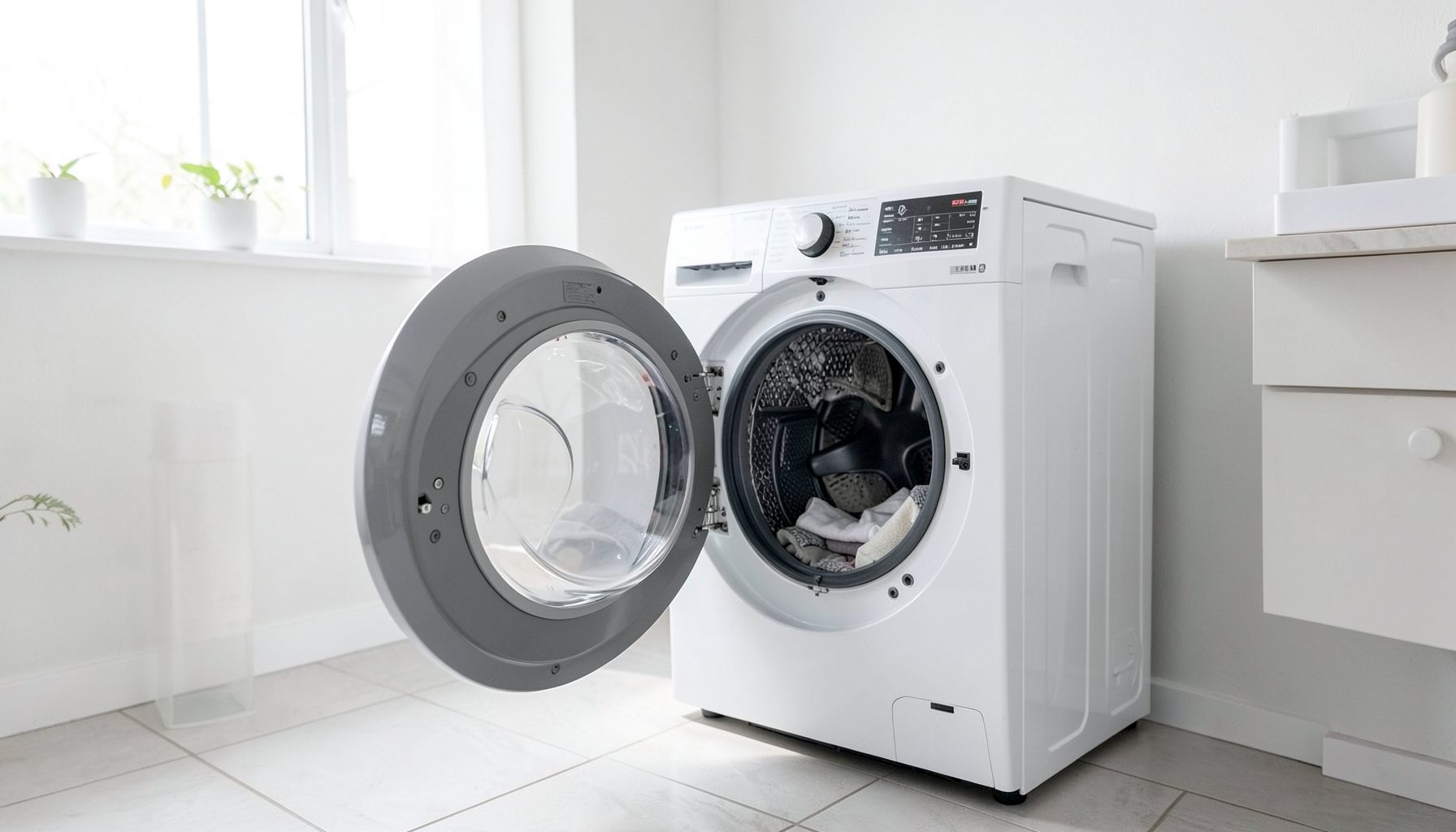
Front-loading washers rely on a door-lock mechanism. Make sure no fabric is caught between the door seal and frame, and check whether the lock indicator appears when a cycle begins. A damaged latch, worn hinge, or dirty seal can keep the control board from allowing a spin cycle.
Press the start button firmly and wait through the normal pause period. Many modern appliances briefly tumble, drain, and sense the load before spinning. If the display shows an error code, record it before switching the machine off. The owner’s manual may identify whether the problem involves an imbalance, drain fault, door lock, or motor.
Check drainage before suspecting the motor
A washer usually will not spin at full speed while water remains in the tub. Inspect the drain hose for kinks, crushing, or an insertion that is too far into the standpipe. The hose should not be sealed airtight into the drain because trapped air can interfere with proper discharge.
Disconnect power before cleaning a pump filter. On many front-loaders, the filter is behind a small access panel near the bottom front. Place towels and a shallow container beneath it, open the filter slowly, and remove lint, coins, hair ties, or small socks. Some top-loading models have a separate drain-pump access point, while others require more extensive disassembly.
If the washer drains slowly, a clogged household drain may be part of the problem. Water around the appliance can damage flooring, baseboards, and cabinets, so respond quickly and document the source. Guidance about water damage repair options can help you evaluate the wider cleanup if an overflow has already affected the room.
Use the symptoms to narrow the cause
Once the load, controls, and drain path have been checked, the remaining clues can point toward a specific repair area. Listen during a test cycle, but do not remove panels while the washer is connected to power. A humming sound, repeated clicking, or complete silence each suggests a different failure.
| What you observe | Likely area to inspect | Sensible next step |
|---|---|---|
| Water remains in the tub | Drain hose, pump, or filter | Clear accessible obstructions and test drainage |
| Drum spins by hand but not during a cycle | Belt, motor control, lid switch, or door lock | Check the manual and arrange diagnostic service |
| Humming without rotation | Jammed pump, motor, or capacitor | Unplug the washer and avoid repeated restart attempts |
| Loud banging during spin | Uneven load, leveling, suspension, or tub bearing | Rebalance and level the washer; seek repair if noise continues |
| Washer is completely silent | Power supply, control panel, fuse, or timer | Check the breaker and outlet, then stop if power is present |
| Burning odor or smoke | Motor, wiring, belt, or control component | Disconnect power immediately and do not operate it |
A worn drive belt may cause a washer to fill and drain while the basket remains still. Some machines use direct-drive motors instead, so the absence of a belt does not rule out a motor, coupling, clutch, or electronic control issue. Parts differ substantially by model, and forcing the basket or removing sealed components can turn a minor repair into a larger one.
Consider moisture and the laundry room
Laundry rooms need adequate airflow. A damp room can encourage mildew, corrode metal components, and make leaks harder to notice. Run an exhaust fan or open a window when practical, while keeping the appliance and electrical connections protected from moisture. For a clearer picture of indoor conditions, use a hygrometer and follow these guidelines for testing home humidity.
Inspect the floor under and behind the machine for swelling, staining, or soft spots. Check supply hoses, the drain connection, detergent drawer, door gasket, and pump-filter cap. Small leaks can continue after a failed spin cycle because the washer may retain water. Replace cracked rubber hoses rather than attempting to patch them.
If the laundry area has a window, keep its screen and frame in good condition so the room can be ventilated without inviting insects or debris. When damage is extensive, these guidelines on replacing window screens can help you decide whether a repair is worthwhile.
Decide when professional service is needed
A basic diagnostic visit is appropriate when the washer drains but will not spin after an even load, when an error returns, or when the door and lid mechanisms appear functional. A technician can test voltage, motor operation, pump resistance, belt condition, suspension parts, and control-board signals without relying on guesswork.
Do not continue operating the appliance if it leaks from an electrical area, emits a burning smell, shocks you, makes violent banging noises, or repeatedly trips the breaker. These signs may indicate damaged wiring, a failing motor, or a serious mechanical fault. Keep the model and serial numbers available, along with the error code and a description of when the spin failure occurs.
Age and repair cost also matter. A machine with a clogged filter or broken latch may be economical to fix, while an older unit needing a motor, tub bearing, and control board may warrant replacement. Compare the repair estimate with the appliance’s remaining service life, energy efficiency, and condition of hoses and seals.
Practical checks before calling for repair
A careful first pass often identifies a simple cause and gives a service professional useful information. Work through these checks in order:
- Unplug the washer before cleaning, moving, or inspecting accessible parts.
- Confirm the cycle, spin setting, child lock, and lid or door closure.
- Redistribute the load and test a drain-and-spin cycle with fewer items.
- Inspect the drain hose, pump filter, floor, supply hoses, and visible seals.
- Record error codes, unusual sounds, standing water, and the point at which the cycle stops.
After testing, leave the door or lid slightly open if the manufacturer permits it so the drum can dry. Wipe away detergent residue and avoid overloading future cycles. Regularly checking hoses and cleaning the pump filter can reduce strain on the drain system and help prevent another interrupted spin.
A washer that will not spin is often diagnosable through its load behavior, drainage, controls, and sounds. Start with safe external checks, address standing water promptly, and stop before electrical or mechanical work becomes necessary. Use the symptoms you recorded to guide an appliance technician toward the correct repair rather than repeatedly restarting the machine.