
When a tree becomes a safety hazard
Trees add shade, privacy, beauty, and environmental value to a property, but a declining tree can become a serious liability. Diseased wood, unstable roots, and damaged limbs may threaten people, roofs, vehicles, fences, and utility lines. Learning how to tell if your tree needs to be removed for safety helps you act before a failure occurs.
Some warning signs are easy to see, such as a large dead branch or a trunk that has begun leaning. Others develop below ground or inside the wood, where decay can remain hidden until a storm exposes the problem. A careful inspection and professional risk assessment are often the safest ways to determine whether pruning, support, or complete removal is appropriate.
Warning signs that deserve attention
Dead branches are among the clearest indicators of tree trouble. Look for limbs with no leaves during the growing season, peeling bark, brittle twigs, or numerous small branches that have snapped and remained caught in the canopy. Large dead limbs over a driveway, walkway, play area, or roof create a greater hazard than similar growth in an open part of the yard.
Cracks and splits in the trunk or major branches should also be taken seriously. Vertical cracks, open cavities, loose bark, and seams where two major stems meet can indicate weak wood. A fork with included bark, where bark becomes trapped between stems, may be especially vulnerable during high winds.
A sudden lean is more concerning when the tree has recently shifted, the soil around its base has lifted, or roots are exposed. A long-standing slight lean may be stable, but movement after heavy rain, construction, or strong wind can signal root failure. Keep people and pets away from a tree that appears to be shifting.
Inspect the trunk, roots, and canopy
Walk around the entire tree rather than viewing it from one angle. Search for mushrooms or conks growing at the base, soft spots, hollow-sounding areas, oozing liquid, and sections where bark has fallen away. Fungal growth does not automatically mean a tree must come down, but it can point to internal decay that requires an arborist’s evaluation.
Examine the root flare, where the trunk widens into the ground. Soil heaving, newly exposed roots, severed roots, soil erosion, and a pronounced trench around the base may reduce stability. Construction, trenching, grade changes, and vehicles driving over the root zone can damage a tree even when the canopy still looks healthy.
The crown provides additional clues. Sparse foliage, dead upper branches, abnormal leaf color, and repeated dieback may reflect drought stress, disease, insect damage, or root problems. One season of stress may be reversible, while progressive decline over several years makes recovery less likely.
Distinguish tree decay from termite activity
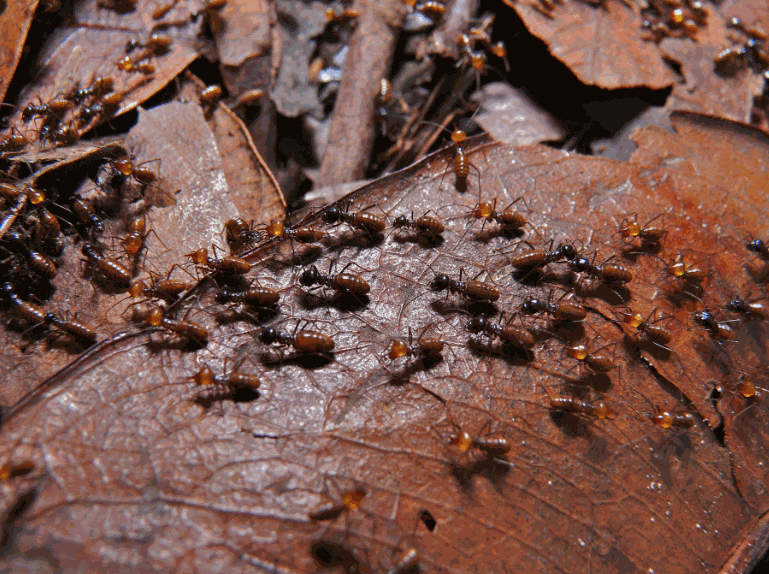
Termites can damage nearby structures and woody debris, but they do not always mean a living tree is structurally unsafe. Inspect the lower trunk, exposed roots, stumps, and fallen wood for mud shelter tubes, galleries, discarded wings, or clusters of insects. Mud tube signs are particularly useful when checking for termite activity around the property, although a pest inspection may be needed to identify the species and extent of damage.
A tree with termites may still have sound structural wood, while a tree without visible insects may contain advanced decay. Carpenter ants, beetles, and wood-boring larvae can also occupy weakened areas. Look for sawdust-like material, small exit holes, and frass, but avoid cutting into the trunk to investigate.
Mulch can help retain soil moisture, yet thick mulch piled against a trunk keeps the bark damp and can conceal problems. Use sensible spacing around the trunk and learn about mulch placement to reduce conditions that attract termites near the foundation. Pest evidence and tree stability are related concerns, but they should be assessed separately.
| Visible condition | Possible concern | Typical next step |
|---|---|---|
| Large dead limb over a structure | Falling branch risk | Restrict access and arrange professional pruning |
| Fresh crack in a main stem | Structural weakness | Keep clear and request an urgent assessment |
| Lean with lifted soil or exposed roots | Root plate failure | Stay away from the area; seek immediate advice |
| Hollow trunk or decay at the base | Reduced load-bearing wood | Have an arborist evaluate the remaining structure |
| Termite tubes or insect exit holes | Pest activity or weakened wood | Arrange a pest inspection and tree assessment |
| Storm-damaged hanging branches | Unstable canopy | Do not climb; use qualified emergency help |
Know when removal is the safer option
Removal is often considered when a tree has extensive trunk decay, major root failure, or multiple large defects that cannot be corrected through pruning. A tree may also need to come down if it is dead and positioned where falling branches or a complete collapse could reach a home, road, power line, or frequently used outdoor area.
Location matters as much as condition. A moderately damaged tree in an unused field may present less risk than a severely compromised tree beside a bedroom or driveway. Arborists commonly evaluate the likelihood of failure, the size of the part that could fall, and the consequences if it reaches a target.
Pruning, cabling, bracing, or reducing a tree’s crown may sometimes lower risk. These measures are not suitable for every defect, and they do not restore wood that has already decayed. If the tree is leaning rapidly, split, uprooted, or touching electrical wires, treat the situation as urgent and keep clear until qualified help arrives.
Prepare before tree work begins
Never attempt to fell a large or damaged tree with a chainsaw simply because it appears manageable from the ground. Tensioned limbs, hidden cavities, spring poles, and unstable roots can make the tree behave unpredictably. A falling tree can also strike another tree and change direction.
Before scheduling removal, check local requirements for permits, protected species, property boundaries, and utility clearance. Mark irrigation lines and other underground services, and identify nearby structures that could be affected by equipment. If the trunk stands near a power line, contact the utility provider and use a contractor trained for electrical-clearance work.
A written assessment from a qualified arborist can clarify whether the recommended action is removal, corrective pruning, monitoring, or treatment. Choose professionals who carry appropriate insurance and can explain the work plan, cleanup, stump handling, and protection for surrounding property.
A practical safety checklist
A consistent inspection routine makes it easier to recognize changes before they become emergencies. Photograph cracks, exposed roots, dead limbs, and areas of dieback from several angles, then compare the images over time. Do not climb the tree or disturb suspected nests, cavities, or electrical lines while inspecting it.
Use these steps when evaluating a questionable tree:
- Keep children, pets, and vehicles away from trees with fresh cracks, hanging limbs, or exposed roots.
- Look for changes after hurricanes, thunderstorms, flooding, excavation, or nearby construction.
- Check whether dead or broken branches could reach a roof, walkway, fence, road, or utility line.
- Record signs of insects, fungal growth, trunk cavities, soil movement, and progressive canopy decline.
- Arrange a professional tree risk assessment when defects are large, worsening, or difficult to interpret.
Act before the next severe storm
Storm preparation should include more than securing outdoor furniture. Review mature trees before the windy season, especially those close to buildings and regularly occupied areas. Removing hazardous deadwood or addressing a developing structural defect can reduce the chance of emergency damage, although no inspection can eliminate every natural risk.
Home maintenance decisions often overlap: tree roots can affect drainage and paving, fallen limbs can damage windows and roofs, and pest activity may appear around both trees and buildings. Reliable homeowner guidance and local background are available through the site’s information, while site-specific hazards should be evaluated by the appropriate licensed professional.
Move people away from a hazardous tree, document the warning signs, and arrange an assessment promptly. When removal is recommended, use an insured tree-care company with the equipment and experience to control the fall, protect nearby property, and complete the cleanup safely.