Create cooling shade for your air conditioner with a tree
A well-placed tree can make the area around an outdoor air-conditioning unit cooler, reduce glare from hard surfaces, and improve comfort near the side of your home. Trees also contribute to broader yard benefits, including soil protection, wildlife habitat, and lower summer heat around patios and walls.
However, planting shade for an air conditioner requires more care than choosing a spot that looks sunny and empty. The condenser needs unrestricted airflow, clear access for servicing, and enough room for the tree’s mature canopy and roots. A tree planted too close can create new maintenance problems instead of solving an old one.
The best approach combines careful site planning, a suitable species, proper planting technique, and regular pruning. Think of the tree as a long-term landscape feature that supports your cooling system rather than as a cover placed directly over the equipment.
Choose the right location before digging
Begin by observing how sunlight reaches the air conditioner throughout a summer day. Afternoon sun is often the most intense, so shade from the west or southwest may be useful. The ideal position varies with your home’s orientation, nearby fences, walls, and existing trees. Watch the area during the hottest part of the day for several days before deciding.
Keep the trunk well away from the condenser. The exact distance depends on the tree’s mature width, but a small ornamental tree should generally be planted several feet from the unit, while a medium or large shade tree may need 10 feet or more. Follow the equipment manufacturer’s clearance requirements, and preserve enough room for a technician to remove panels and work safely.
Avoid planting where mature branches will hang over the unit and drop leaves, seeds, sap, or fruit into the cabinet. Do not block the discharge airflow above the condenser. A tree should eventually cast shade across the surrounding ground or side of the unit while leaving the top and sides open for ventilation.
Select a tree that fits the property
Read the mature height and spread on the plant label rather than judging a sapling by its current size. Fast-growing trees can outgrow a narrow side yard quickly. Their roots may affect paving, shallow utility lines, irrigation pipes, or foundations, and large branches may become a hazard during storms.
Deciduous trees are often useful near cooling equipment because they provide dense summer foliage and allow more winter sunlight after their leaves fall. Small maples, serviceberries, redbuds, and certain native flowering trees may work in suitable climates. Drought-tolerant native species are usually easier to maintain once established, but the best choice depends on local soil, rainfall, hardiness zone, and available space.
Evergreens can provide year-round screening and shade, yet they may restrict airflow and drop needles continuously. Avoid species known for invasive roots, weak branch structure, heavy fruit, or excessive pest problems near the condenser. Ask a local nursery or county extension office about trees that perform well in your region of Georgia and match the mature dimensions to the planting site.
Prepare the soil and plant correctly
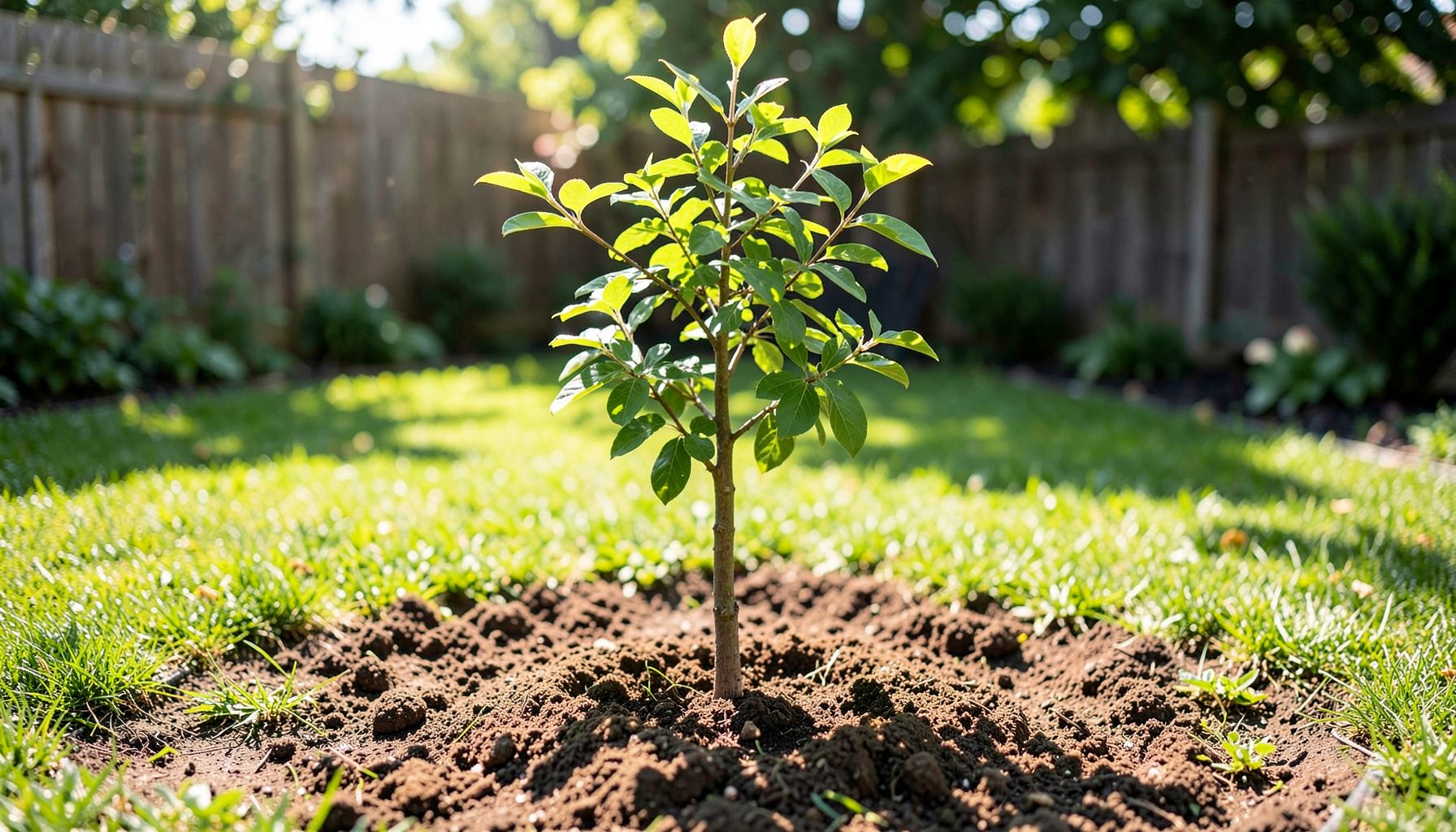
Before digging, identify underground utility lines and mark irrigation pipes, drainage routes, and buried cables. Choose a day when the soil is workable, then dig a hole two to three times wider than the root ball and no deeper than its existing height. The trunk flare should sit at or slightly above the surrounding soil, never buried beneath a deep layer of fill.
Remove containers, wire, and synthetic wrapping according to standard planting practice. Loosen circling roots gently, position the tree upright, and backfill with the soil removed from the hole unless a soil test indicates a specific amendment. Water slowly to settle air pockets, then apply a broad, shallow layer of organic mulch while keeping it several inches away from the trunk.
Mulch can conserve moisture and moderate soil temperature, but it should not touch siding, the foundation, or the tree trunk. Because damp organic material placed against a home can create pest concerns, review these mulch placement tips before finishing the planting bed.
Match shade benefits with airflow needs
The tree’s purpose is to cool the surrounding environment, not to form a tight enclosure around the outdoor unit. Air-conditioning condensers release heat through their coils and fan, so dense shrubs or low branches can reduce efficiency if they restrict the movement of air. Leave the manufacturer’s recommended clearance on every side and above the equipment.
A young tree may provide little shade at first. Temporary measures such as a properly designed shade structure or landscape screen can help during the establishment period, but never attach a cover directly to the condenser while it is operating. A solid barrier can trap hot air and make the system work harder.
Shade may lower heat gain around the condenser, especially when the unit sits beside a sun-baked wall or concrete surface. It is not a substitute for clean coils, a clear drain, a correct refrigerant charge, and a properly sized system. Keep expectations realistic: the most valuable results are often a cooler microclimate, better yard comfort, and protection from intense afternoon radiation.
| Planning factor | Practical target | Reason |
|---|---|---|
| Distance from condenser | Follow equipment clearance rules; allow extra room for mature growth | Preserves airflow and service access |
| Canopy position | Shade nearby ground and walls, not the condenser’s discharge path | Reduces heat exposure without trapping hot air |
| Tree size | Select a mature height and spread suited to the yard | Prevents future conflicts with roofs, wires, and equipment |
| Root behavior | Choose a species appropriate for nearby paving and utilities | Limits lifting, cracking, and underground damage |
| Mulch depth | Use a shallow, even layer kept away from the trunk and foundation | Holds moisture without creating a damp contact zone |
Water and prune the tree as it grows
During the first growing season, water deeply and slowly whenever the top few inches of soil begin to dry. Newly planted trees usually need consistent moisture rather than frequent shallow sprinkling. Adjust for rainfall, soil type, temperature, and local watering restrictions. A soaker hose or slow drip line can reduce runoff and keep water away from the condenser’s electrical components.
Inspect the tree several times each season. Remove damaged, crossing, or low branches before they grow toward the equipment. Pruning should preserve a balanced canopy and a strong central structure, not create an abrupt opening that stresses the tree. Large limbs near the roof, utility lines, or air conditioner may require an insured arborist.
Keep fallen leaves, twigs, and grass clippings away from the condenser. Turn off power at the disconnect before cleaning around the cabinet, and follow the unit’s manual for safe coil care. Routine gutter upkeep also helps keep leaves and storm debris from accumulating around the home; these gutter maintenance steps can support the wider drainage plan around a newly planted tree.
Check the planting area through every season
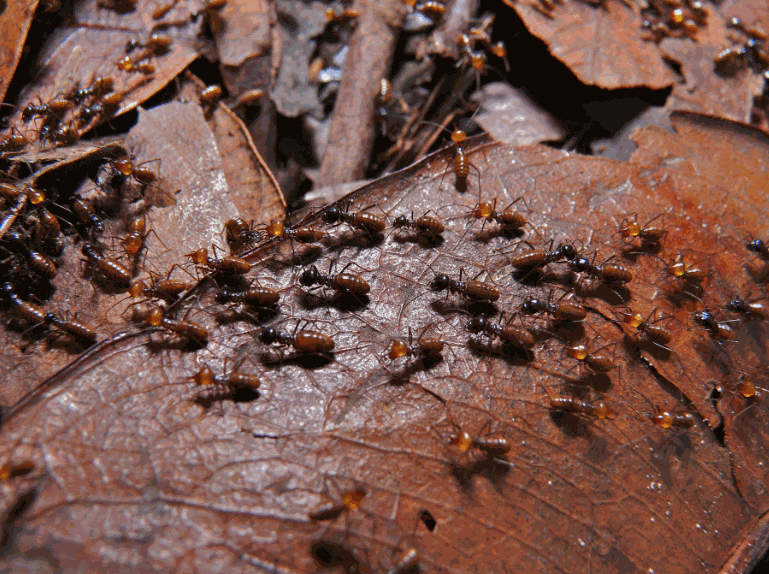
A planting plan that works in spring may cause trouble by late summer. Check whether branches are approaching the condenser, whether roots are lifting edging or paving, and whether irrigation is leaving the equipment pad wet. Look for ants, termites, fungal growth, or mulch that has washed against the foundation after heavy rain.
Before severe weather, remove dead branches and inspect staking. Young trees generally need support only until their roots establish; ties left too tight can girdle the trunk. If the tree suffers storm damage, keep people away from hanging limbs and arrange professional removal when the work involves ladders, roofs, or electrical lines.
Review shade patterns again as the canopy expands. If the tree becomes too dense, selective pruning may restore airflow. In some cases, relocating or removing a poorly placed tree is safer than repeatedly trimming it into an unhealthy shape.
Practical choices for a healthier cooling zone
Use these recommendations when planning the planting:
- Measure the condenser’s required clearances and the tree’s mature canopy before purchasing a tree.
- Choose a climate-appropriate, structurally strong species with manageable roots and limited litter.
- Plant far enough away to protect service access, airflow, paving, utility lines, and the foundation.
- Water deeply during establishment and maintain a shallow mulch ring that stays clear of the trunk and house.
- Inspect and prune regularly so branches, leaves, fruit, and roots do not interfere with the cooling equipment.
A properly positioned tree can provide useful summer shade for an air-conditioning system while improving the entire yard. Start by mapping the sun, utilities, mature canopy, and service clearances, then plant during a season that supports root establishment. With steady watering and seasonal inspections, the tree can become a durable part of your home’s heat-management plan.