
How to Mulch Around Trees Correctly for Moisture
Mulch helps tree roots hold moisture, stay cooler and cope with dry weather, but the material must be placed carefully. A thick mound pressed against the trunk can trap dampness, encourage decay and provide cover for pests. Good mulching is less about piling on as much material as possible and more about creating an even, breathable layer over the root zone.
Australian gardens often face a demanding combination of hot summers, sandy soil, water restrictions and sudden heavy rain. Whether you are caring for a gum in Perth, a citrus tree in Brisbane or a young ornamental tree in Adelaide, the right mulch depth and placement can reduce watering without creating new maintenance problems.
Why Mulch Helps Tree Health
Organic mulch slows evaporation from the soil surface, which is especially useful during a dry spell or a Queensland heatwave. As materials such as wood chips, shredded bark and leaf compost break down, they add organic matter and support soil structure. This can help sandy ground retain water and make compacted soil easier for roots to penetrate.
Mulch also moderates temperature swings. Bare soil can become extremely hot in full sun, then lose moisture rapidly when wind passes over it. A suitable layer provides insulation while allowing rain and irrigation to reach the soil. It can suppress competing weeds, reducing the amount of water taken up by grass and unwanted plants around the tree.
The benefit depends on the tree and its setting. A recently planted sapling has a smaller root system and may need consistent moisture, while an established native tree may be adapted to leaner conditions. Avoid assuming that every tree needs frequent watering simply because mulch has been added.
Choosing Materials for Australian Gardens
Untreated wood chips, coarse bark and chipped branches are generally useful because they allow air movement and drain reasonably well. Arborist mulch can be economical when sourced from local tree contractors, while council green-waste facilities may sell composted products at a lower price. Check what is included before spreading it, since fresh material can contain weed seeds, grass clippings or unsuitable plant residues.
Leaf litter and composted garden mulch can work well, though fine products may compact when wet. Avoid building a dense, soggy mat over heavy clay. Decorative stones and gravel reduce evaporation in some landscapes, but they can increase heat around roots and do little to improve soil structure. Plastic sheeting beneath organic mulch can also restrict water and oxygen movement.
In bushfire-prone parts of New South Wales, Victoria and South Australia, check local guidance before placing dry mulch near buildings. A mulch bed beside a timber wall, deck or fuel storage area may increase fire exposure. Councils, state fire authorities and insurers can have different requirements, so clearance from structures matters as much as the material itself.
Getting the Depth and Shape Right
For most garden trees, spread mulch about 5 to 8 centimetres deep after the surface has been lightly cleared. Coarser wood chips can sit toward the deeper end of that range, while fine composted material should usually be shallower. An excessively thick layer can stay wet underneath, limit oxygen around shallow roots and encourage roots to grow towards the surface.
Cover the broad area beneath the canopy where practical, because many fine feeder roots extend well beyond the trunk. A wide, thin ring is more effective than a small, tall mound. Keep the mulch level rather than forming a raised basin that holds water against the stem during storms.
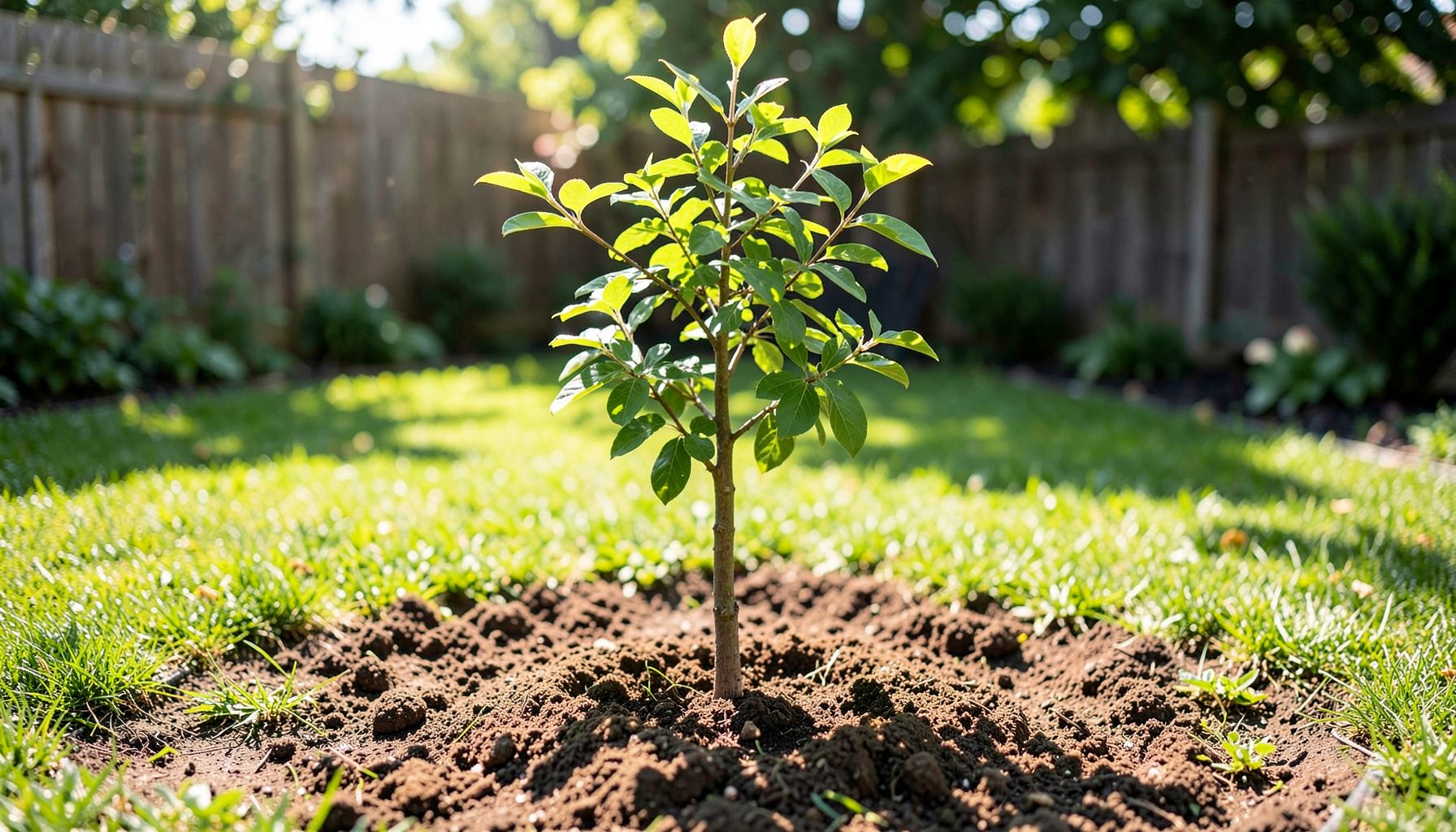
Leave a clear gap around the trunk, usually 10 to 15 centimetres for a young tree and more for a large trunk. The finished shape should resemble a flat doughnut, not a volcano. Pull mulch away if it becomes pressed against bark after rain, wind or garden activity.
Applying Mulch Without Damaging Roots
Remove grass and obvious weeds by hand or with a shallow hoe before mulching. Do not dig deeply around an established tree, since large roots may lie close to the surface. If weeds are persistent, a layer of damp cardboard can be used beneath coarse organic mulch, provided it is kept away from the trunk and does not form a sealed barrier.
Water the soil thoroughly before spreading mulch, particularly if the ground is already dry. Mulch reduces future evaporation, but it cannot replace a deep initial soak. Apply it evenly and keep irrigation emitters positioned so water reaches the root zone rather than running off the top of a dry mulch layer.
Inspect the area after the first substantial rainfall. If water is pooling, the soil may be compacted or the mulch may be too fine. If the surface is blowing away, use a coarser product or reduce the exposed area. Australian winds can shift lightweight mulch quickly, especially in open suburban blocks and coastal gardens.
Preventing Pests, Rot and Water Problems
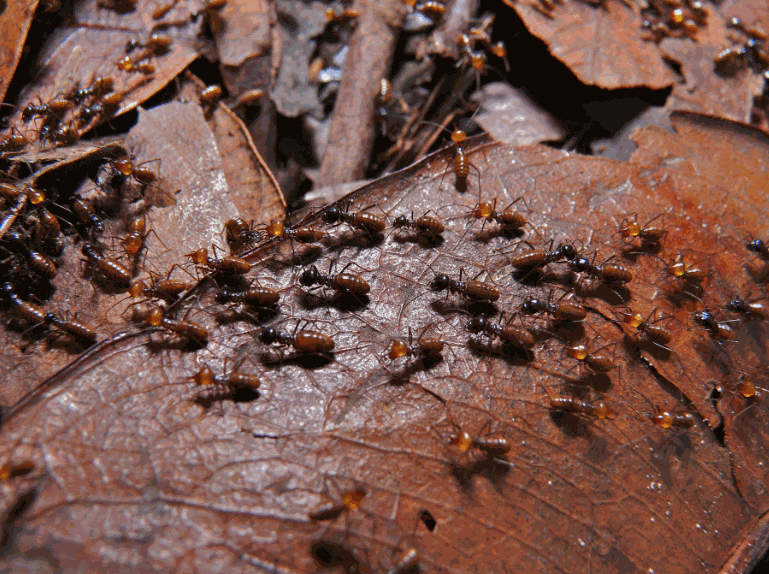
Mulch touching bark keeps the trunk base damp and can create hiding places for insects. It may also make it harder to notice fungal growth, cracks or termite activity. Termites do not eat every kind of mulch, but organic material close to a house can make inspections more difficult and provide a concealed route through garden beds.
Keep mulch well away from external walls, weep holes, vents and inspection zones. This is particularly important for homes in termite-prone areas of northern Australia. A clear strip around the building helps you spot mud tubes, damp patches and pest movement before they become expensive problems.
Moisture management should be considered across the whole property. If a laundry remains humid because a vent is blocked, address it with the guidance in dryer repair tips, rather than expecting garden mulch to solve general dampness. Outdoor drainage, roof runoff and leaking taps should also be corrected before adding a thick organic layer.
Maintaining Moisture Through the Seasons
Mulch settles and decomposes, so inspect it every few months. Top up only when the layer has become noticeably thin, and avoid automatically adding a new layer on top of old material. Rake lightly to break up compacted patches, remove rubbish and check that the trunk gap remains open.
During heatwaves, test moisture below the mulch with a finger or a narrow probe. The surface may appear dry while the soil underneath remains damp, or rain may have run across the top without soaking in. Water slowly and deeply at the root zone, following local restrictions and any advice about watering times.
After storms, look for exposed roots, erosion and mulch piled against the trunk. In sandy Perth soils, a coarse layer may need occasional redistribution. In clay soils around Melbourne or Canberra, keeping the depth moderate helps prevent prolonged saturation. If a tree shows yellowing leaves, dieback, fungal growth or sudden instability, mulch adjustment alone may not address the underlying issue.
Good home maintenance also means keeping nearby openings and exterior surfaces in sound condition. For a related seasonal check, seal draughty windows before winter, while keeping garden beds low enough that they do not conceal damp frames or damaged sills.
Before mulching, check the tree’s trunk, clear weeds gently, water the soil, and mark a ring at least 10 centimetres from the bark. Spread 5 to 8 centimetres of suitable mulch to the edge of the canopy, then inspect the ring again after the next heavy rain.