How to Clean a Garbage Disposal
In Australian kitchens, the appliance often called a garbage disposal is sold as a food waste disposer. It sits below the sink and macerates scraps, but its blades, seals and motor housing can collect grease and fine particles. Cleaning works best as routine care rather than a deep scrub after a bad blockage.
Always start with the power off. Switch off the disposer, unplug it if accessible, or turn off the relevant circuit at the switchboard; never put a hand or tool into the chamber while the motor could start. Keep children and pets away, and use the reset and hex key supplied with the appliance where possible.
Most smells come from trapped food, a dry residue ring or a loose sink connection rather than from the motor itself. A slow leak can be harder to notice under an Australian sink, especially where hot water is used for dishes and the disposer shares a crowded cabinet with bin storage.
Council rules matter around food waste: many Australian households have a green-lid organics bin and a separate general rubbish bin, although accepted items vary by council and area. Compostable-looking bags may still be rejected. Apartment owners may also need strata approval, while homes with approved greywater systems require a compatible appliance and correct discharge setup.
Know what your disposal can handle
Read the appliance label or manual before putting anything in it. Most domestic units accept small pieces of soft food waste, such as vegetable trimmings, fruit peel and cooked vegetables. Their exact capacity differs, so breaking scraps down and observing the manufacturer’s instructions prevents a cheap clean from becoming an expensive repair.
Keep bones, shells, fruit pits, corn husks, onion skins, celery strings, potato peels and other fibrous or hard items out of the chamber. Plastic, glass, metal, paper, tea bags and large chunks can damage blades or jam the mechanism. Do not pour cooking oil, paint, solvents or chemicals into the sink.
This belongs with routine household upkeep rather than emergency plumbing. If a unit is nearing the end of its life, replacement food waste disposers and common reset tools are sold through Australian hardware and kitchen retailers; match the appliance power rating and sink configuration before buying parts.
Find the real source of an odour
Switch the unit on with water running and listen for the familiar change in pitch. If it runs freely but the smell remains, food residue is likely. If it hums, slows or trips the breaker, stop using it and follow the blockage and reset steps rather than adding more cleaning products.
Check the removable sink strainer, splash guard, dishwasher hose and sink trap for trapped scraps or grease. The dishwasher hose can mimic a disposer problem, while a loose hose can drip onto the cabinet floor. A floor drain or sewer odour is usually outside the disposer and needs a licensed plumber to diagnose.
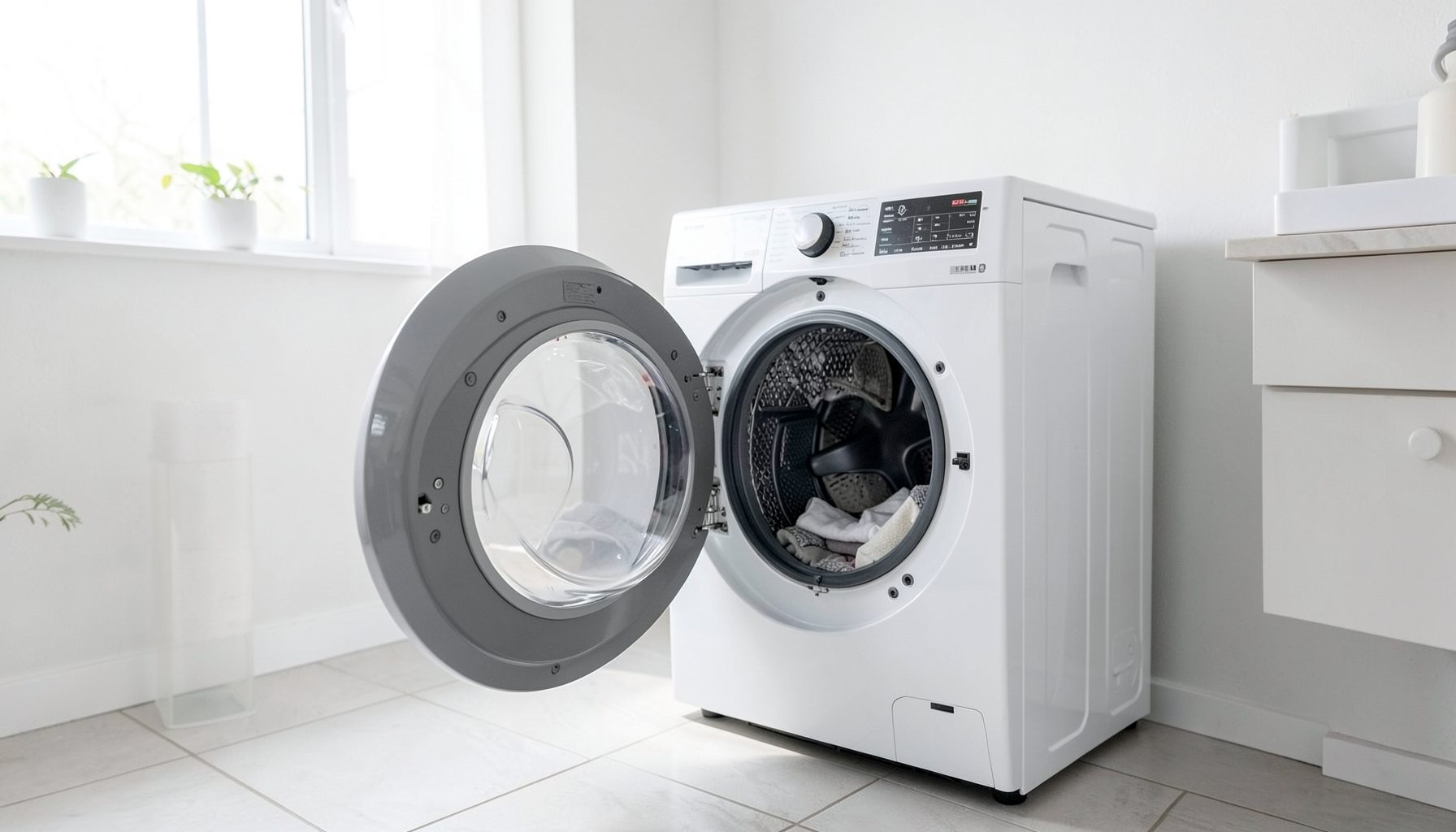
If the odour appears when laundry appliances operate, do not assume the kitchen is responsible. Understanding two-cycle dryer performance can help isolate moisture or airflow problems in the laundry, while testing the sink with the dishwasher off can show whether the dishwasher hose is involved.
Clean the removable parts without soaking the motor
Turn off and isolate the power, then remove the sink stopper or strainer according to the manual. Many units have a removable splash guard that can be lifted out; some have fixed parts, so do not force anything. Place dishwasher-safe pieces in warm, soapy water and let them soak.
Scrub the guard and strainer with a stiff brush, paying attention to holes and rubber seals where scraps lodge. Wipe the sink flange and the visible rim with mild detergent. The approach is similar to gentle oven cleaning, where controlled products and gentle scrubbing remove grease without exposing the appliance to corrosive fumes.
Use a manufacturer-approved disposer brush or a soft toothbrush only on reachable surfaces; never push it deep enough to contact the blades. Do not remove the lower collar or motor housing, and never hose water into an electrical unit. Rinse cleaned pieces, reinstall them dry, and test the disposer with water before normal use.
Clear a simple blockage safely
First switch the power off and wait for the motor to cool. Insert the supplied hex key into the centre socket underneath and rock it back and forth, then remove the obstruction with tongs or pliers. A broom handle, screwdriver or metal bar can bend the linkage or leave you with a tool trapped in the unit.
Restore power and press the red reset button, if fitted, then try the overload reset according to the manual. Never hold the reset button continuously or bypass a tripped breaker. If the motor hums without turning, switches off under load or smells hot, isolate it and arrange a licensed electrician rather than testing it repeatedly.
Small ice cubes can sometimes firm up residue and sharpen the blades, but only if the manufacturer permits this method. Run cold water, feed a few cubes and keep the guard clear. Persistent jams, leaks or repeated resets usually mean the motor, switch or plumbing needs professional attention.
Choose products and water habits that suit Australia
Hot water and dish detergent work well for washing removable parts, but use warm rather than boiling water because sudden heat can crack porcelain or distort seals. Inside the unit, start with a cleaner specifically labelled for food waste disposers. Avoid pouring bleach, acid drain cleaner, ammonia or vinegar into the chamber; mixing chemical types can create dangerous gas.
Run cold water whenever the disposer is operating, unless the manufacturer gives different directions. Turn the tap off as soon as the motor stops, which saves water during restrictions without leaving the machine running dry. During a council water-saving period, wiping scraps into the organics bin, where accepted, can reduce unnecessary rinsing.
Australian supermarket and hardware shelves often carry foaming disposer cleaners, but read the label and ventilation warnings. Baking soda can freshen a rinsed sink surface, yet it does not replace washing trapped grease. The practical rule is mild soap for removable parts, manufacturer-approved product inside, and controlled water flow.
Make disposal care part of the weekly kitchen routine
Wipe the sink flange after food preparation and run the unit briefly with cold water when suitable scraps are present. Once a month, isolate the power and clean the removable guard and strainer. Check under the sink for dampness, corrosion, hose kinks and insect activity, especially before a humid Brisbane summer or a busy holiday period.
Replace a cracked seal, leaking hose or failed switch promptly. In a rental, tell the property manager or strata contact before altering the unit, because noise hours and plumbing approvals can apply. A licensed plumber should repair pipe connections, while electrical faults belong with a licensed electrician; using licensed trades is standard across Australia and keeps responsibility clear.
Use the council’s current waste guidance rather than assuming every green-lid bin accepts the same items. Plausible scraps can reduce rubbish, while unsuitable materials still belong in general waste or recycling where accepted. The practical takeaway is simple: keep the visible parts clean, use only approved cleaners, and deal with a hum, leak or repeated reset before the small problem becomes a blocked drain.