
How to choose the right mulch for your garden beds
Mulch is one of the simplest ways to improve a garden bed, but the best choice depends on more than color and price. A suitable layer of mulch can conserve moisture, moderate soil temperature, reduce weed growth, and slowly improve the soil as it breaks down. The wrong material, however, may attract pests, hold too much moisture, or interfere with plants.
Before buying mulch, consider the bed’s location, the plants growing there, local weather, and how often you want to refresh the material. A vegetable garden, tree ring, foundation bed, and dry perennial border may each benefit from a different type of ground cover.
Good mulch selection also begins with sound planting and maintenance habits. Homeowners managing young trees can find related guidance in tree care resources, while everyday observations—such as soil drainage, runoff, and plant stress—can help determine which mulch will work best.
Start with the needs of the garden bed
Organic mulch is usually the most versatile option for established garden beds. Shredded bark, wood chips, pine straw, compost, and chopped leaves gradually decompose, adding organic matter to the soil. This can improve structure in compacted ground and help sandy soil retain water.
The best material depends on the plants. Acid-loving shrubs may perform well with pine needles or pine bark, while annual flowers and vegetables often benefit from compost or finely shredded leaves. Coarser wood chips are useful around shrubs and trees because they resist blowing away, but they may be inconvenient in areas replanted frequently.
Think about the bed’s moisture level as well. A low, poorly drained area may stay wet under a thick layer of mulch. In that setting, use a thinner application and correct drainage problems rather than relying on mulch to solve standing water.
Compare organic and inorganic materials
Organic mulches are popular because they improve the soil as they decompose. Wood chips, bark, straw, pine straw, and leaf mold are natural-looking choices that support long-term soil health. They usually need to be replenished every year or two, depending on rainfall, foot traffic, and decomposition speed.
Inorganic materials include gravel, stone, rubber mulch, and landscape fabric used beneath a decorative covering. Gravel can work well in xeric beds, around plants that prefer sharp drainage, or in areas where wind quickly scatters lighter materials. It does not add nutrients, and it can become hot in full sun, so it may stress shallow-rooted plants.
Rubber mulch lasts longer than many organic products but offers little benefit to the soil. It can also become hot and may be difficult to remove later. Landscape fabric can reduce weeds temporarily, yet soil and organic debris eventually collect on top, allowing weeds to return. For most home garden beds, a suitable organic mulch is a more flexible choice.
Use depth to protect plants
Applying too little mulch leaves bare soil exposed, allowing weeds to germinate and moisture to evaporate quickly. Applying too much can block air exchange, keep stems damp, and encourage decay or pest activity. A layer about two to four inches deep is generally adequate for most beds, with finer materials kept closer to the lower end of that range.
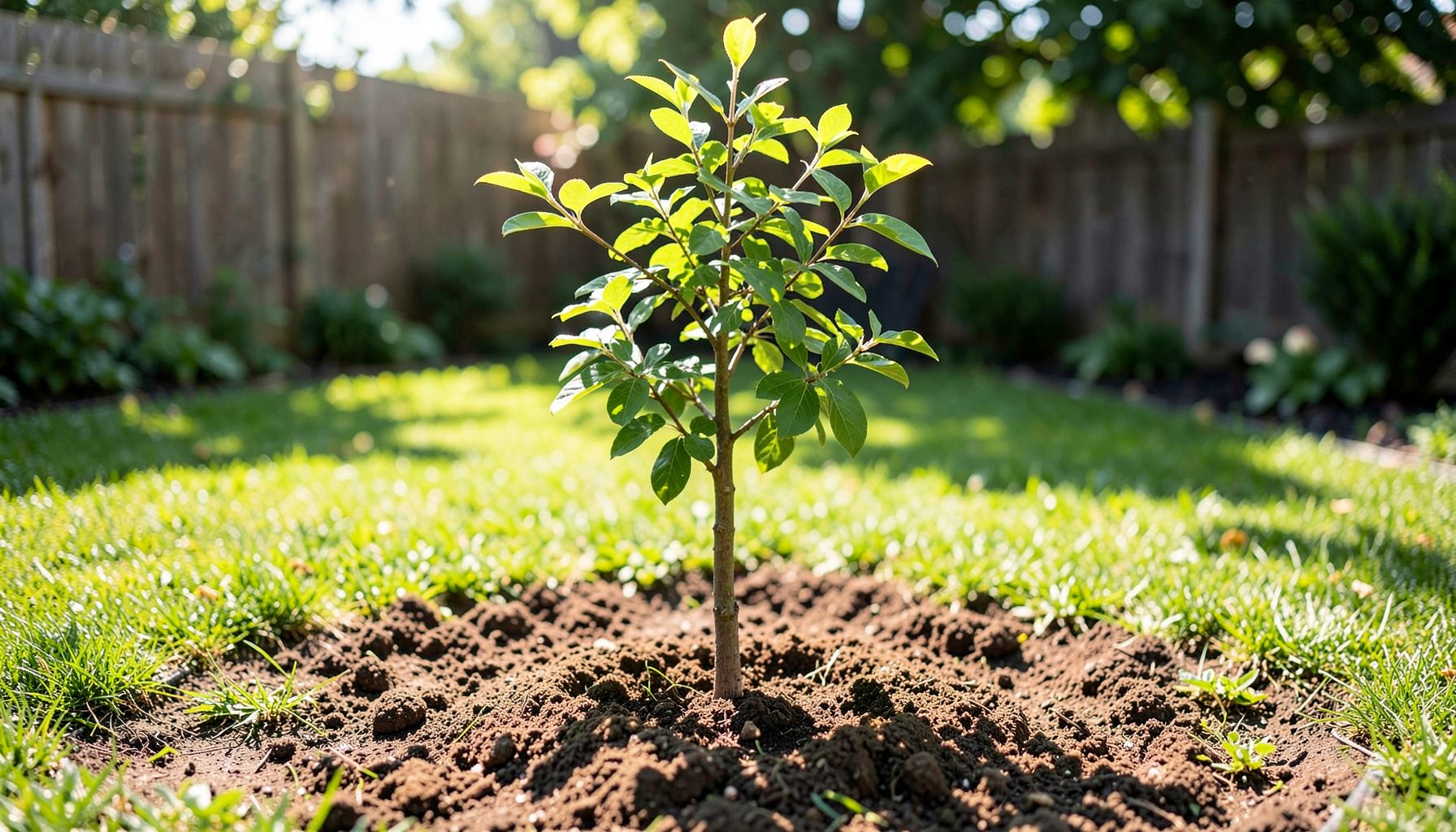
Always keep mulch away from plant stems and tree trunks. Create a visible gap around each trunk rather than forming a mound against the bark. Constant dampness at the base can damage bark and create favorable conditions for insects and fungal problems. Mulch should cover the root zone, not smother the plant crown.
Refresh the layer when it becomes thin, but avoid automatically adding a new thick layer each season. Rake old mulch to distribute it evenly, remove compacted sections, and check whether the soil beneath is draining properly. If the material has formed a dense mat, loosen or replace it before adding more.
Match mulch to soil and climate
Clay soil benefits from organic matter, but mulch does not replace proper soil preparation. Coarse materials placed on the surface can protect the ground from crusting and erosion while improving conditions gradually. Homeowners planting trees in dense soil can also review advice on planting in clay soil before choosing the material around the root zone.
In hot, dry areas, mulch helps reduce evaporation and insulates roots from temperature swings. Straw, pine straw, and wood chips can be particularly useful where irrigation is limited. In rainy locations, avoid piling mulch against foundations or allowing it to obstruct drainage paths. A narrow, well-maintained gap near walls can reduce the chance of moisture reaching siding or masonry.
Wind is another practical consideration. Lightweight leaves and straw may blow into lawns or storm drains, while heavier bark nuggets, wood chips, and gravel stay in place more effectively. If runoff is a concern, shredded mulch often knits together better than smooth chips and can help slow the movement of rainwater across a slope.
Weigh appearance, safety, and maintenance
Appearance matters because mulch is a visible part of the landscape. Natural bark and wood chips provide a soft, informal look, while dark compost creates a clean background for flowers. Dyed mulch can offer consistent color, but select products from reputable sources and avoid material with a strong chemical odor or visible construction debris.
Mulch placed near walkways should not create a slippery surface or spill onto pavement. Stone may shift underfoot, and large wood pieces can be awkward around lawn equipment. Keep mulch away from outdoor vents, utility access points, and areas where it could be carried into drains during heavy rain.
Fresh wood chips are not necessarily harmful, but they should remain on the soil surface rather than being mixed into the planting area. As they decompose, they may temporarily use available nitrogen near the surface. Aged chips, shredded bark, compost, and leaf mulch are often easier choices for beds where annual plants will be installed soon.
| Mulch type | Strengths | Limitations | Good uses |
|---|---|---|---|
| Shredded bark | Long-lasting, neat appearance, resists movement | Costs more than some loose materials | Shrubs, perennial beds, slopes |
| Wood chips | Affordable, coarse, good moisture retention | Can look uneven and decompose slowly | Trees, shrubs, wide landscape beds |
| Pine straw | Lightweight, easy to spread, useful for acid-loving plants | Blows away and needs regular renewal | Sloped beds, azaleas, informal borders |
| Compost | Adds nutrients and organic matter | Breaks down quickly, may contain weed seeds if poor quality | Vegetable gardens and annual beds |
| Gravel or stone | Durable, low decomposition, suitable for dry gardens | Does not improve soil and may heat up | Xeriscapes, pathways, drainage-friendly beds |
| Leaf mulch | Inexpensive, soil-building, readily available | Can mat when applied too thickly | Perennials, woodland-style beds, soil improvement |
Buy and apply mulch carefully
Read the product label and inspect the material before spreading it. Look for clean, evenly sized mulch without trash, treated lumber fragments, invasive plant material, or an unusually sour smell. Bulk mulch can be economical for large beds, while bagged products are easier to transport and measure for small projects.
Calculate the amount needed by measuring the bed’s length and width, then accounting for the desired depth. It is better to apply a moderate layer and add a little later than to create a deep mound that restricts water and air. Spread mulch evenly with a rake, and water the bed afterward if the soil is dry.
A practical buying checklist
Use these points before purchasing a load or several bags:
- Select organic mulch when improving soil is a priority.
- Choose heavier materials for exposed or windy locations.
- Use a thinner layer around shallow-rooted plants and in damp beds.
- Keep every type of mulch several inches away from stems and trunks.
- Inspect color, smell, texture, and contents before applying it.
- Recheck the bed after heavy rain to confirm that mulch has not blocked drainage.
Observe the garden for a few weeks after installation. Healthy mulch should conserve moisture without leaving the soil constantly soggy, and it should remain evenly distributed after ordinary weather. If plants begin to yellow, stems stay damp, or water runs off instead of soaking in, adjust the depth and investigate the underlying soil.
Choosing mulch is an ongoing part of garden care rather than a one-time decorating decision. Select a material that supports the plants, fits the climate, and matches the amount of maintenance you can provide. Then spread it at the right depth, keep it clear of trunks and stems, and inspect it regularly. Take those steps this season to protect your beds, conserve water, and build healthier soil over time.