
How to Choose the Best Time of Year to Plant Trees in Australia
Planting a tree at the right time gives its roots a better chance to settle before it faces intense heat, cold snaps or dry conditions. The ideal season depends on the tree species, your local climate, soil moisture and whether the plant is a young container specimen, a bare-root tree or an established tree moved from another part of the garden.
Australia’s varied climate means there is no single planting month that works everywhere. A suitable period for a street tree in Melbourne may be too wet for a garden in Cairns, while a tree planted in Perth may need careful irrigation before the first summer heat arrives. Use the calendar as a guide, then let local weather and soil conditions make the final decision.
Read Climate Before Calendar
In most southern Australian regions, autumn is an excellent time to plant trees. The soil is still warm after summer, rainfall often becomes more reliable, and cooler air reduces stress on newly disturbed roots. Winter can also work well in areas with mild conditions, particularly for deciduous trees that are dormant and have fewer leaves to support.
Spring is generally useful in colder districts, including parts of Victoria, Tasmania and the Australian Capital Territory, once severe frost has passed. It gives roots several months to develop before winter. However, spring planting can become difficult if a warm, dry spell arrives early, so regular watering may be needed.
In Brisbane, Darwin and other tropical or subtropical areas, the beginning of the wet season can be highly effective for planting, provided the ground is not waterlogged. In Perth and much of southern Western Australia, autumn is often preferable because dry summers place heavy demands on young trees. Check local rainfall patterns and Bureau of Meteorology forecasts instead of relying only on a national planting guide.
Match Timing To Tree Type
Deciduous trees, such as ornamental pear, maple and many fruit trees, are commonly planted in late autumn or winter while they are dormant. A tree with bare branches loses less water during this period, allowing energy to go into root growth. Avoid planting when the ground is frozen, saturated or too hard to dig.
Evergreen native trees and shrubs can often be planted through autumn, winter or early spring, depending on the region. Eucalypts, bottlebrushes and grevilleas vary widely in mature size and water needs, so read the plant label carefully. A species that suits a dry Adelaide block may struggle in a shaded, humid Brisbane garden.
Fruit trees need extra planning. Planting during dormancy gives the root system time to establish before flowering and fruit production, but frost-sensitive varieties may need a protected position. Local nurseries can recommend cultivars suited to your area, including trees that cope with coastal winds, clay soil or limited winter chill.
Use Soil And Weather Signals
Good planting conditions begin with workable soil. Dig a hole after moderate rain, when the soil crumbles between your fingers rather than forming a sticky ball. If water remains in the hole for hours, improve drainage or choose a raised position before planting. Waterlogged soil can suffocate roots and encourage fungal problems.
Avoid planting during a heatwave, immediately before a forecast frost or when strong winds are likely. Wind can loosen a newly planted tree and dry out foliage before roots make contact with surrounding soil. A calm, overcast day is often ideal, especially for a leafy container-grown tree.
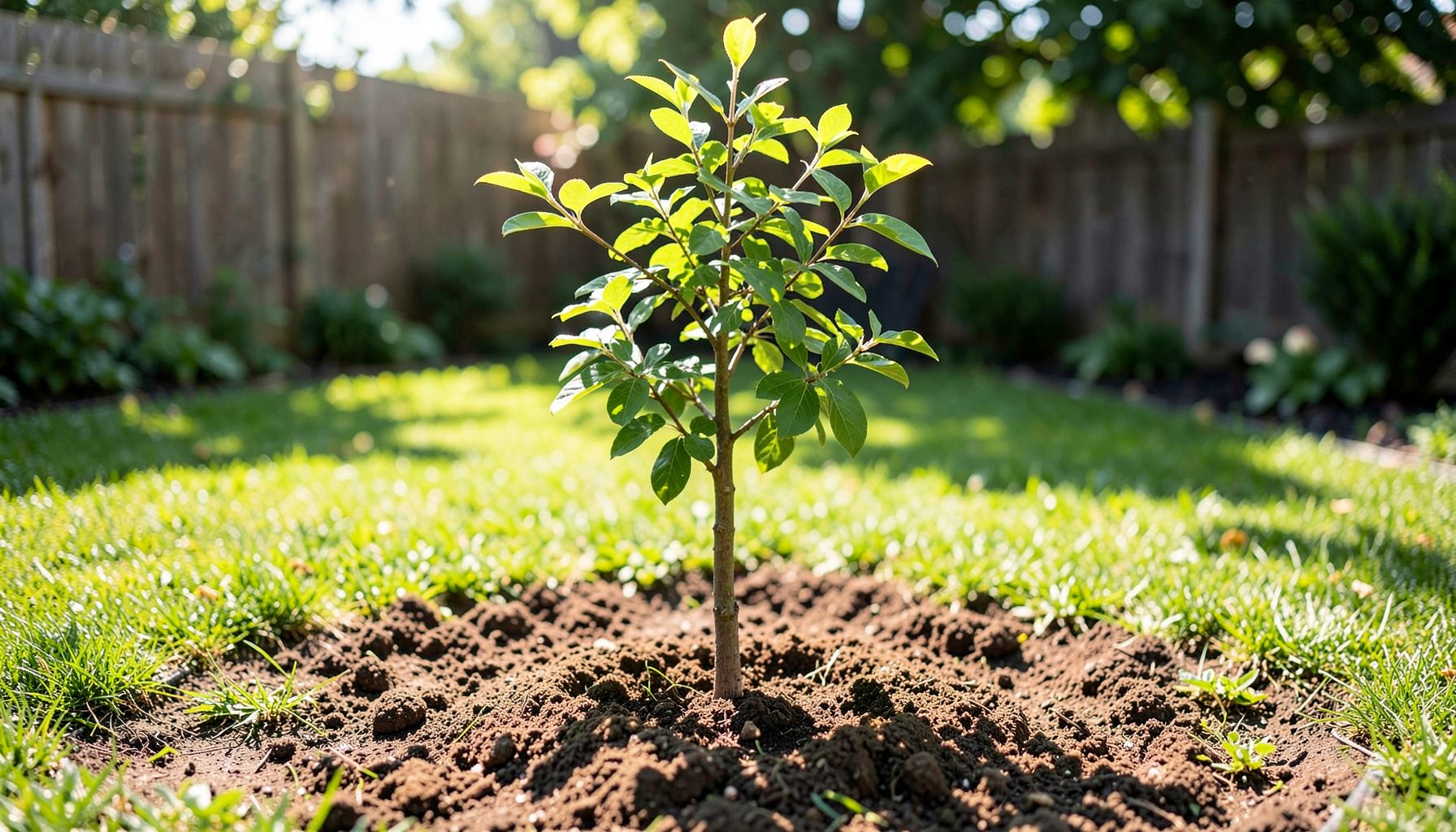
Prepare the ground a few weeks ahead where possible. Remove competing grass, check the mature canopy width and loosen compacted soil across the planting area. Do not dig a narrow, deep hole in hard ground; a broad hole allows new roots to move sideways, where air and moisture are more available.
Plan Watering And Establishment
A tree still needs water after seasonal rain begins. Water slowly and deeply at planting, then monitor the root zone rather than watering according to a fixed timetable. The surface may look damp while the soil below is dry, particularly in sandy areas around Perth or exposed coastal gardens.
Apply a layer of organic mulch around the tree to reduce evaporation and moderate soil temperature. Keep mulch away from the trunk so moisture does not remain against the bark. A temporary stake may help in a windy location, but ties should be loose enough for gentle trunk movement.
Before planting, check how watering will fit around household routines. Repairing an outdoor tap or noticing a leak early can prevent a young tree from drying out. If wet-weather chores also include checking appliances, the site’s washing machine advice can help you keep household water problems separate from garden irrigation.
Avoid Site And Root Problems
Tree selection is as important as timing. Consider overhead power lines, underground pipes, driveways, fences and the future spread of roots and branches. In Australia, contact Before You Dig Australia before excavating near services. This is especially important on established suburban blocks where utility routes may not be obvious.
Large gum trees, figs and some palms can become unsuitable for small yards because of their eventual height, canopy spread or root behaviour. A small tree in a nursery pot is not necessarily a small mature tree. Allow space for branches to grow without touching the roof, blocking gutters or interfering with neighbouring properties.
When preparing the garden before winter, include nearby home maintenance in the same inspection. Keeping gutters clear helps prevent overflow around a new planting bed, while checking a vented appliance can reduce household fire risks; these dryer repair tips are useful during that seasonal check.
Build A Seasonal Planting Plan
Start by writing down your suburb, soil type, available sunlight and the tree’s mature dimensions. Then identify whether the tree is deciduous, evergreen, native, fruiting, bare-root or container-grown. This information narrows the suitable planting window far more effectively than choosing a date from a general gardening calendar.
For cooler southern areas, aim for autumn or late winter after the worst frost has passed. In warmer southern regions, autumn is usually reliable. In tropical areas, plant near the start of the wet season, while avoiding periods when heavy rainfall could wash soil away or leave the roots submerged.
Buy healthy stock with firm roots, undamaged bark and no signs of pest activity. Plant at the same depth as the tree was growing in its container, or with the root flare visible at ground level. Water thoroughly, mulch correctly and monitor the plant weekly through its first summer.
A seasonal maintenance record makes future decisions easier. Note the planting date, rainfall, watering frequency, new growth and any leaf discolouration. The broader home maintenance blog can also provide practical reminders for coordinating garden care with routine upkeep.
The most dependable planting window is a period of mild weather when the soil is moist but not saturated and you can provide consistent follow-up care. Choose the tree first, check its local climate requirements, then select a suitable fortnight rather than forcing the job into a particular month.
This week, identify the tree’s mature size and mark its proposed position before checking the soil moisture and local forecast for a safe planting day.